Thursday, September 22, 2022

AFRICAN AMERICAN ART AT SWANN — OCTOBER 6


Swann Galleries’ Thursday, October 8 sale of African American Art offers a selection of the best in the genre as the house marks its 15th year of dedicated auctions to work by African American and Black artists. The fall 2022 sale will present a survey of American art history with art by Black artists ranging from Henry Ossawa Tanner at the turn of the nineteenth century through the current era with Chakaia Booker.


            Headlining the auction is a bright and energetic 1967 abstract work in orange by Norman Lewis ($400,000-600,000). The oil on canvas comes from the late sixties period when Lewis created a series of paintings depicting abstracted jazz musicians—an important moment coming between his black and white Civil Rights and Klan images of the early to mid-1960s and the Sea Change series in the 1970s. Additional works by Lewis include an early oil on canvas from 1947 ($120,000-180,000), and Joiners, a 1954 watercolor and ink drawing ($30,000-40,000).


            Further important works in abstraction from the 1960s to 1990s include Hale Woodruff’s Landscape, oil on canvas, 1967 ($150,000-250,000); Romare Bearden’s Wine Star, oil on canvas, 1959 ($150,000-250,000); Sam Gilliam’s Horses Upside Down, acrylic and polypropylene on canvas, 1998 ($120,00-180,000); Charles Alston’s Black and White #3 (Astral #3), oil on canvas, 1961 ($100,000-150,000); and Cliff Joseph’s Rise People Rise, oil on canvas, 1970 ($35,000-50,000).


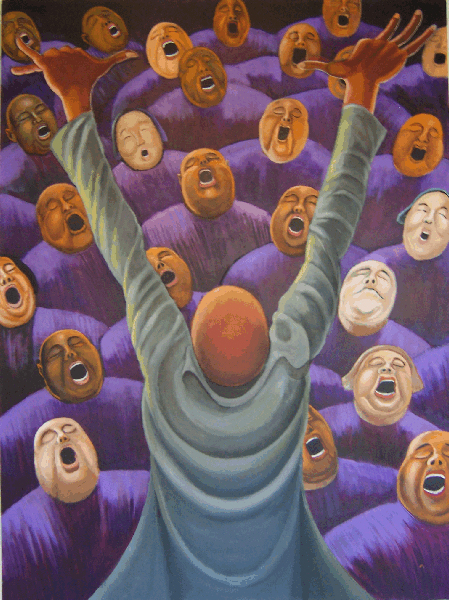
            Compounding on recent market recognition at Swann, a selection of tooled-leather paintings by Winfred Rembert includes The Book That Couldn’t Be Read, 2013 ($10,000-15,000), Winfred Rembert and Class of 1959, 1999 ($25,000-35,000), and Jeff’s Café & Room and Zeb’s Shoe Shine, 1998 ($25,000-35,000). Rembert’s 2021 biography, told by Erin I. Kelly, Chasing Me to My Grave: An Artist’s Memoir of the Jim Crow South, recently won the 2022 Pulitzer Prize for Biography or Autobiography. Fabric-based artists on offer include Bisa Butler with Sea Island Woman, an intricate 2007 quilted work referencing the Gullah people of South Carolina ($40,000-60,000); Xenobia Bailey with Think, a 2008 hand-crocheted study for her MTA Hudson Yards work ($12,000-18,000); and Michael Cummings with Freedom, a 2013 quilted and appliqué depicting a civil rights worker singing for freedom with lyrics and quotations surrounding them ($12,000-18,000).


Modernist highlights include Westchester Graduation Ball, a 1951 brush-and-ink drawing by Jacob Lawrence ($50,000-75,000); Domestic Worker, a scarce print by Elizabeth Catlett, created at the Taller de Gráfica Popular upon her move to Mexico in 1946 and the first she printed there ($20,000-30,000); and Folk Singer, a 1957 print by Charles White, which reinterprets his iconic ink drawing from the same year, Folk Singer (Voices of Jericho: Portrait of Harry Belafonte) ($20,000-30,000). Sculptures from the era feature a marble carving by Marion Perkins ($30,000-40,000), and a significant welded steel sculpture by Harold Cousins ($30,000-40,000).


            Also represented in the sale is a selection of photography with images made by James Van Der Zee, Anthony Barboza, LaToya Ruby Frazier and Carrie Mae Weems; figurative works by Joseph Delaney and Hughie Lee-Smith; assemblage artists Noah Purifoy and Betye Saar; and contemporary works by Chakaia Booker, Hank Willis Thomas, Glenn Ligon and Kara Walker among others.


            Exhibition hours are 12 p.m to 5 p.m Saturday, October 1 and Monday, October 3 through Wednesday, October 5. Live online bidding platforms will be the Swann Galleries App, Invaluable, and Live Auctioneers. The complete catalogue and bidding information is available at www.swanngalleries.com and the Swann Galleries App.


The complete lot listing.

Image highlights can be found here.

Captions:

Lot 23: Elizabeth Catlett, Domestic Worker, lithograph, 1946. Estimate $20,000 to $30,000.

Lot 29: Marion Perkins, Untitled (Head of a King), carved marble, circa 1950-55. Estimate $30,000 to

$40,000.
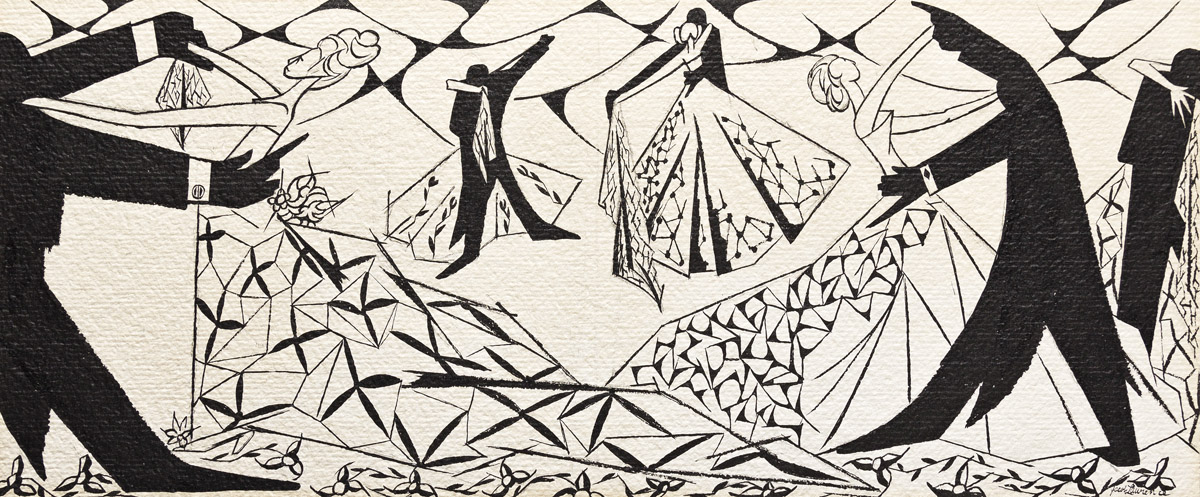


Lot 31: Jacob Lawrence, Westchester Graduation Ball, brush and ink on paper, 1951. Estimate $50,000 to

$75,000.

Lot 34: Charles White, Folk Singer, linoleum cut, 1957. Estimate $20,000 to $30,000.
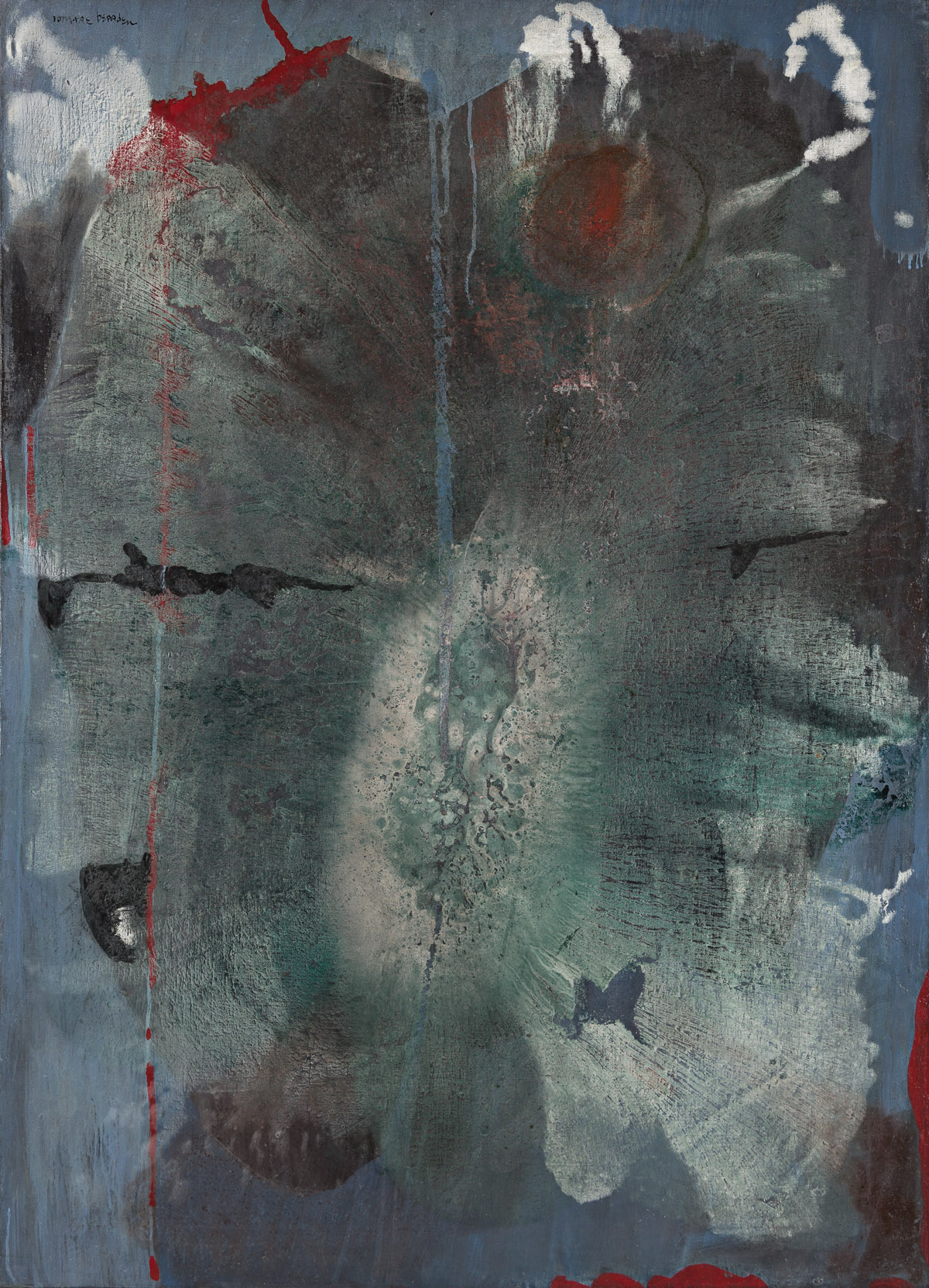


Lot 45: Romare Bearden, Wine Star, oil on canvas, 1959. Estimate $150,000 to $250,000.

Lot 48: Charles Alston, Black and White #3 (Astral #3), oil on canvas, 1961. Estimate $100,000 to

$150,000.
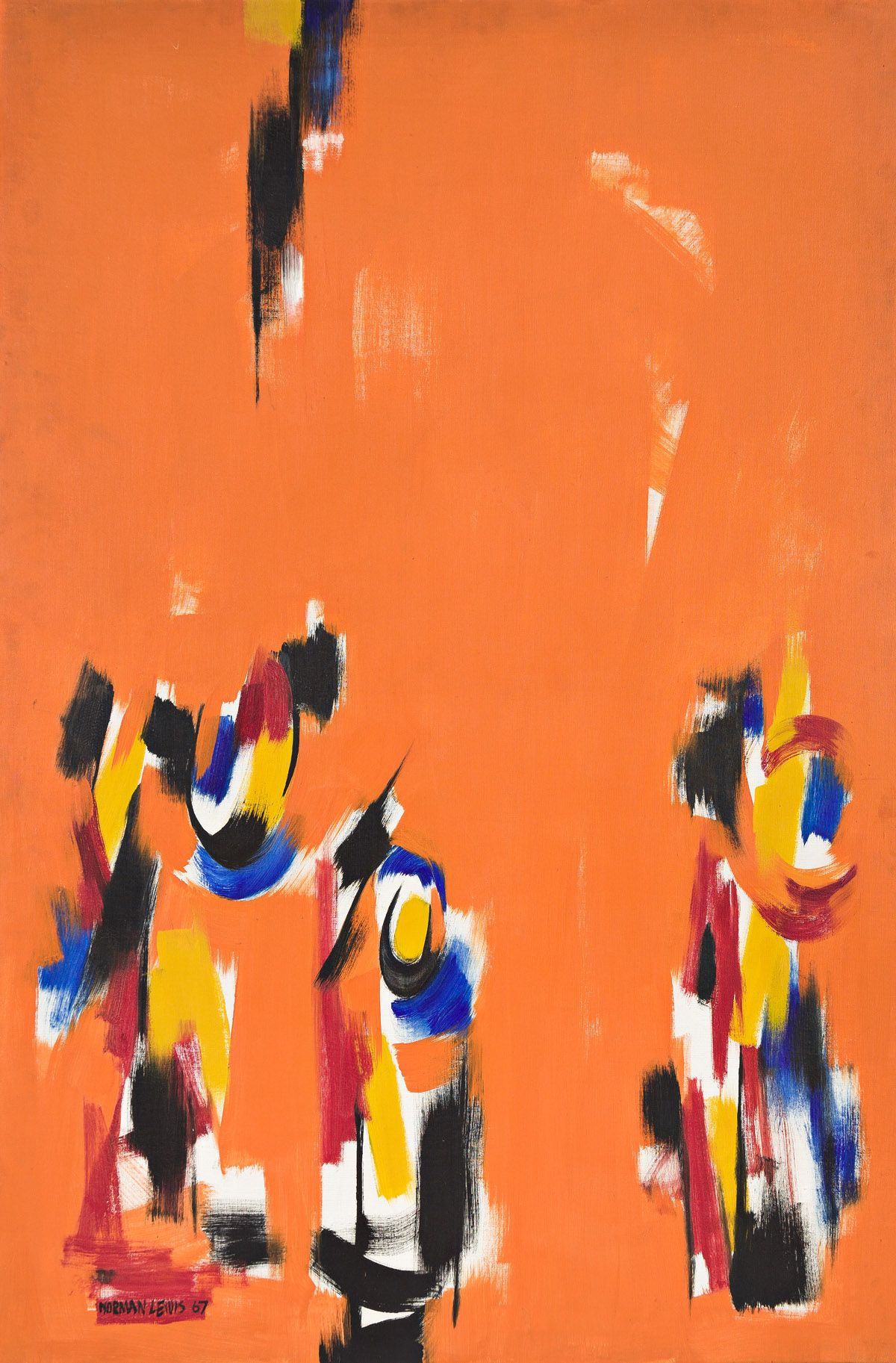


Lot 65: Norman Lewis, Untitled (Abstract in Orange), oil on canvas, 1967. Estimate $400,000 to $600,000.

Lot 66: Hale Woodruff, Landscape, oil on canvas, 1967. Estimate $150,000 to $250,000.

Lot 74: Cliff Joseph, Rise People Rise, oil on canvas, 1970. Estimate $35,000 to $50,000.

Lot 145: Carrie Mae Weems, Untitled (Woman and Daughter with Makeup), silver print, 1990. Estimate

$6,000 to $9,000.

Lot 179: Winfred Rembert, Jeff’s Café & Pool Room and Zeb’s Shoe Shine, dye on carved and tooled

leather, 1998. Estimate $25,000 to $35,000.

Lot 188: Kara Walker, The Emancipation Approximation (Scene #26), color screenprint, 2000. Estimate

$15,000 to $25,000.

Lot 197: Bisa Butler, Sea Island Woman, quilted and appliquéd dyed fabric, 2007. Estimate $40,000 to

$60,000.

Lot 202: Xenobia Bailey, Think (Study for MTA Hudson Yards), hand-crocheted cotton and acrylic yarn on

canvas, 2008. Estimate $12,000 to $18,000.

Saturday, May 14, 2022

Ernie Barnes


One of the hallmarks of Heritage's approach to and definition of American Art, which anchors its abundant relationship with all Art and Design, is that American Art for Heritage is the work that has illustrated not only our nation's history, but also its character — its hopes, fears, strengths, flaws and evolution. The disposition of the United States, still a young country after all, is defined by its stories and storytelling about who we are and how we've arrived here, and its May 16 American Art Auction is nothing if not packed with works that tell stories and paint a picture, as it were, of a people's shared disposition defined by optimism, ambition, community and imagination. The tightly curated auction is shaped by a full suite of works by the inimitable Ernie Barnes along with a trove of significant Golden Age and Modern Illustration by Norman Rockwell, J.C. Leyendecker and Maurice Sendak, a stunning landscape by Frederic Church and a venture into the American West by William Robinson Leigh. The auction is itself a turning point in Heritage's tale of love for classic American Art as a category.

"American Art has always been the beating heart of our nation's story, and it's an extraordinary privilege to bring together such a dynamic, narrative-rich collection for this auction," says Aviva Lehmann, Heritage's Senior Vice President of American Art. "This auction is a tribute to the artists who have captured our collective dreams, struggles, and triumphs with honesty and beauty. We're honored to present a selection that feels both timeless and urgently alive."
Ernie Barnes (American, 1938-2009)
Anchor Leg, 1983


Ernie Barnes (American, 1938-2009)
Hold the Pocket, 1982
Acrylic on canvas
36 x 60 inches (91.4 x 152.4 cm)
Signed lower right: Ernie Barnes
Barnes, the former pro footballer who the Denver Broncos' head coach once fined for sketching during team meetings, is one of the 20th century's most distinctive painters and in the 1980s was befriended by John Mecom Jr., at the time the seasoned owner of the NFL's New Orleans Saints. Mecom Jr. commissioned Barnes — known for his incisive and expressionist take on bodies working in unison and in tension — to produce a handful of sports-themed paintings during Barnes' runup to create official works for the 1984 Summer Olympics in Los Angeles. The resulting Barnes paintings for Mecom Jr.'s collection anchor the May 16 auction and are a tour de force of the artist's fluid neo-mannerist depiction of the physicality of his world — the way bodies merge, move, interact and dissolve into one another. They are slices of a warm and thriving community life of movement: 


Sandlot Saints (1983) with its depiction of an informal and joyous football game that's broken out in an abandoned city lot; Anchor Leg (1983) which captures the climactic moment of a group of relay-race sprinters' last explosive burst across the line; Hold the Pocket (1982) which invites the viewer into the heart of the frenzied immediacy of the football scrum; and 


Opening Ceremonies (1984), with its triumphant panorama of communal elation at the start of a Olympic Summer Games. "Here, with near-Bruegelian density, Barnes renders a vibrant crowd bursting with energy that draws the viewer in not as an observer but as a participant," says Lehmann.
 

Ernie Barnes
American, 1938–2008
"The Sugar Shack", 1971
Oil on canvas
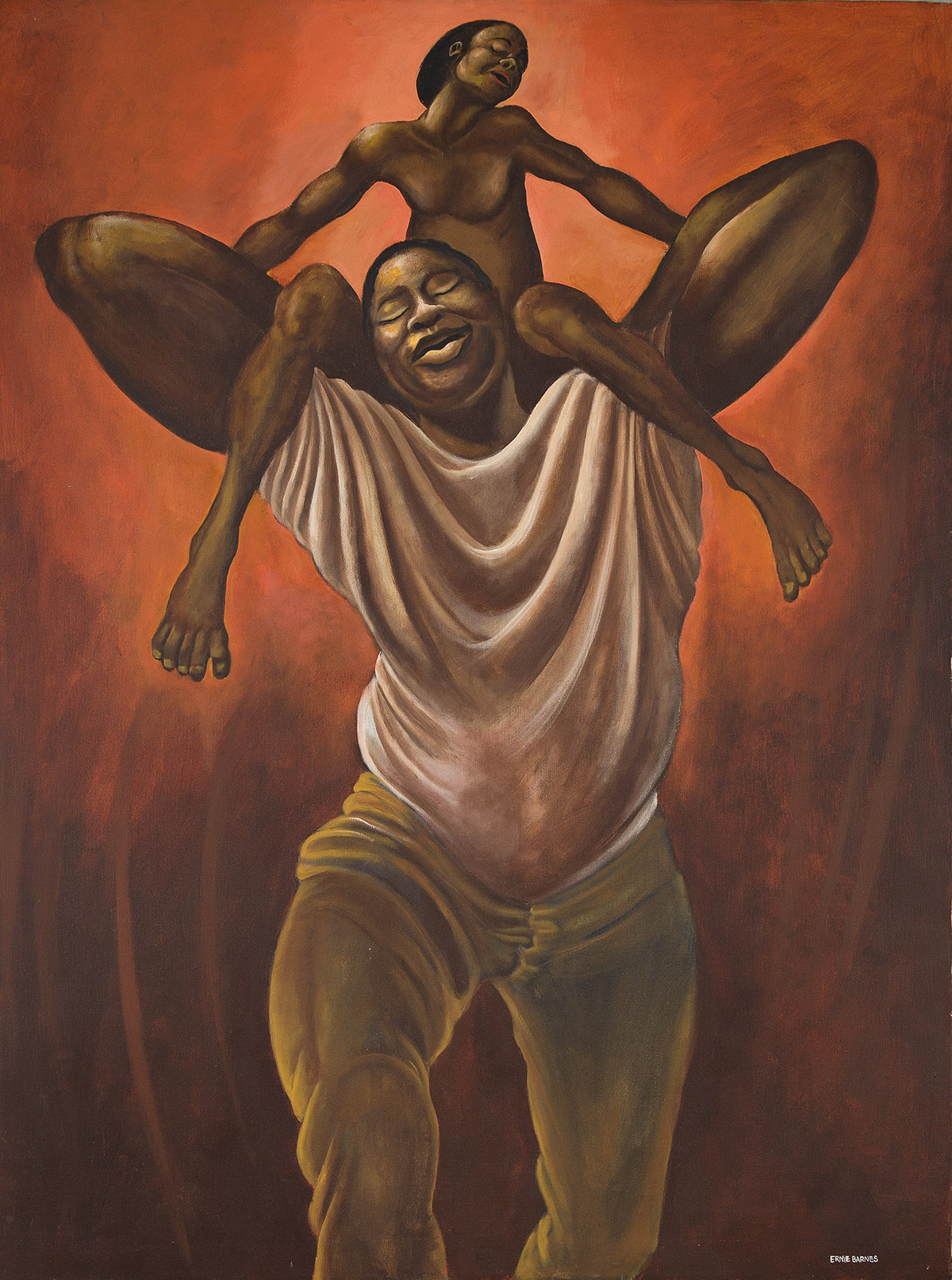
48 x 36 in. (121.92 x 91.44 cm.) 🕺🏾

Ernie Barnes was a former NFL football player who turned to painting after his retirement in 1964. He was known for presenting figures through elongated forms in a unique neo-mannerist style. "The Sugar Shack" was used in the closing credits of the 1970s sitcom Good Times, as well as serving as the album cover of the Marvin Gaye recording "I Want You". Barnes was also the official artist of the 1984 Summer Olympic Games in Los Angeles

Complete article
Ernie Barnes, Full Boogie, 1978. Acrylic on canvas, 36 x 48 inches (91.4 x 121.9 cm). Courtesy of the Ernie Barnes Estate, Ortuzar Projects and Andrew Kreps Gallery.

Complete article
Ernie Barnes (1938-2009) High Aspirations 36 x 18 in. (91.4 x 45.7 cm.) (Painted in 1971.)
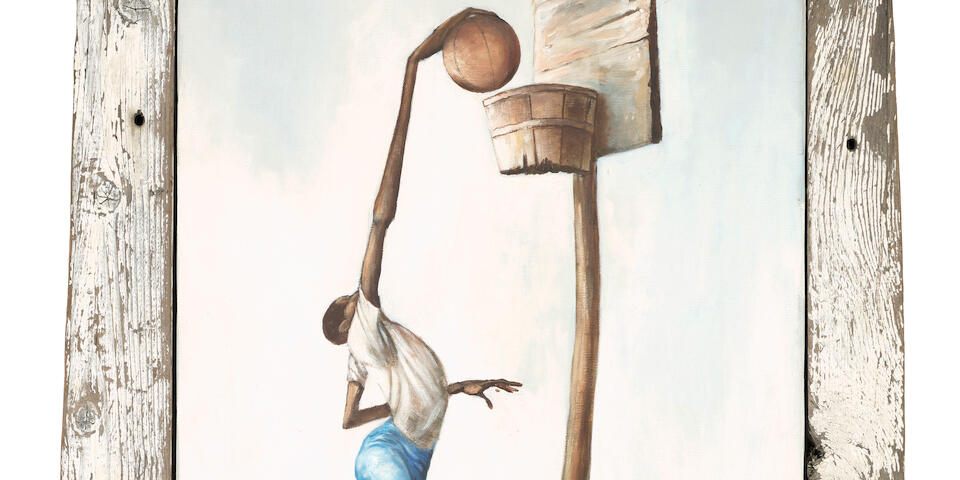
A masterful and dynamic painting from 1971 by Ernie Barnes (1938-2009) titled High Aspirations will lead the American Art sale on November 7 in New York. Estimated at $500,000 – 700,000, this work captures a moment of uninterruptable grace for the subject on the basketball court with Barnes mirroring the verticality of the leaping figure with a strikingly vertical canvas.

WANN GALLERIES | AFRICAN AMERICAN ART | APRIL 6 


Ernie Barnes Leads Sale with ‘Daddy’ EST. $250,000 to $350,000 


Ernie Barnes (1938-2009) The Gospel Truth, 1985. Estimate: £600,000 - 1,000,000. Photo: Bonhams.

The Gospel Truth, a masterwork by Ernie Barnes (1938-2009) leads Bonhams’ Post-War & Contemporary Art sale on Thursday 13 October in New Bond Street, London. The work has an estimate of £600,000-1,000,000.

Ralph Taylor, Bonhams Global Head of Post-War and Contemporary Art, commented: “The gospel hall paintings of Ernie Barnes have become some of the most renowned and sought-after works by the artist, and The Gospel Truth is arguably the finest example to come onto the market. Barnes' life and career has received renewed recognition since his retrospective at the California African American Museum in 2019. We are particularly excited to offer The Gospel Truth given Bonhams’ recent successes in selling masterpieces by Barnes – having achieved an impressive $1,620,375 for his Solid Rock Congregation (1993) earlier this month at Bonhams New York. This follows on from the strong result for The Maestro – which featured on the album cover of The Crusader's Ghetto Blaster (1984) – and sold at Bonhams American Art sale for $882,375 in May.”

Barnes dedicated himself full-time to art following a career in professional football. He is known for elongated figures, capturing his observations of African American life growing up in North Carolina and living in Los Angeles. Barnes' work has appeared throughout pop culture on album covers, in television and movies. He was the official artist of the 1984 Summer Olympic Games in Los Angeles.

Purchased from the artist by Tim Hauser, eight-time Grammy winner and founder of The Manhattan Transfer, the present work conveys a musical passion shared between two masters of their craft. Hauser was introduced to Barnes’ work by the bassist Kenny Gradney of Little Feat, who also came up with the work’s title, The Gospel Truth. The painting was acquired fresh from Barnes' easel and would be a brightening focal point of Hauser’s collection. One of the most remarkable gospel canvases, it comes to the market for the first time since its making, full of unique details and qualities that make it one of the most inspired paintings by the artist.

Commenting on his relationship to sport and its impact on his practice, Barnes commented that "being an athlete helped me to formulate an analysis of movement, and movement is what I wanted to capture on canvas more than anything else.”

Ernie Barnes masterpiece to be offered at Bonhams New York on September 9
Solid Rock Congregation (1993), by Ernie Barnes (estimate: $500,000-700,000). Photo: Bonhams.
NEW YORK, NY.- A masterpiece by American artist Ernie Barnes (1938-2009) depicting a lively Sunday church service will hit the auction block this fall at Bonhams New York, following a summer tour to London and Los Angeles. A breakout star of the spring season, Barnes’ Solid Rock Congregation (1993) is another exemplary painting from his oeuvre depicting an energetic, multi-figure composition with strong emotional resonance. Barnes conveys the euphoric, rhythmic music deeply rooted in gospel churches of the American South, painting a Sunday morning church scene brimming with people singing, dancing, and playing instruments through his unique painting style capturing movement and passion. Estimated at $500,000 - 700,000, Solid Rock Congregation will be offered in a single lot live auction on September 9 in New York.

The work has never been seen by the public before and has resided with American gospel singer Margaret Bell who commissioned the painting and is depicted in the work singing into the microphone. Ms. Bell was friends with Barnes after meeting him through the NFL that her then husband, Keith Byars, who like the artist played football in the NHL. After releasing a record with Warner Alliance Records in 1991, Ms. Bell recalls sitting in Barnes studio and him saying, “After hearing your voice Margaret, I can envision a wonderful piece, full of color, movement and music! If you commission me, I will create it for you!”

Barnes dedicated himself full-time to art, after his professional football career, and became a leading 20th century artist. He is known for elongated figures, capturing his observations of African American life growing up in North Carolina and living in Los Angeles. Barnes’ work has appeared throughout pop culture on album covers, in television and movies, and he was the official artist of the 1984 Summer Olympic Games in Los Angeles. Featured on the album cover of The Crusader’s Ghetto Blaster from 1984, Barnes’ painting The Maestro, was recently sold at Bonhams American Art sale for $882,375.

“Following the success of The Maestro, Bonhams was pleased to learn about this unknown work that is clearly a masterpiece by the artist,” commented Andrew Huber, Senior Specialist and Head of Sale for Post-War & Contemporary Art at Bonhams New York, “and we are thrilled to show it to the public for the first time.”

The work is currently on preview at Bonhams New Bond Street in London and will head to Bonhams Los Angeles on July 27, then reach its final stop at Bonhams New York starting September 1 and will be previewed alongside two contemporary art exhibitions from the Post-War & Contemporary department.

A Black woman holding up a vinyl record in a DJ booth lined with papers, a martini glass, and a bottle in a bucket. A bright line shines in toward her.
Ernie Barnes, LATE NIGHT DJ, 1980.PHOTO JEFF MCLANE/COURTESY UTA ARTIST SPACE AND THE ERNIE BARNES ESTATE
Painting of a richly hued football scene in which Black athletes twist past each other.
Ernie Barnes, Cool Quarterback, 1991.COURTESY THE ESTATE OF ERNIE BARNES, ANDREW KREPS GALLERY, AND ORTUZAR PROJECTS

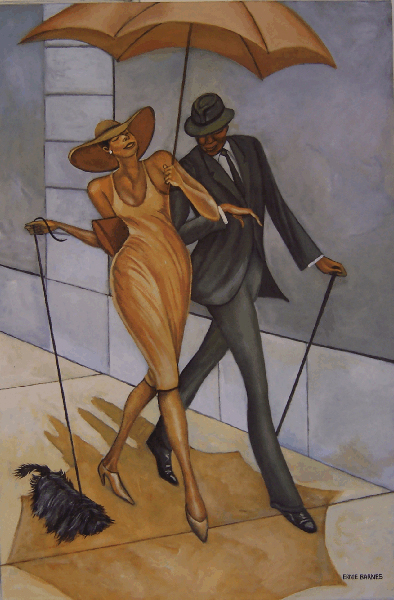
Ernie Barnes, Uptown, Downtown, Acrylic, Overall: 30 x 20in. (76.2 x 50.8cm), Courtesy of the Ernie Barnes Family Trust, Hollywood, California


Ernie Barnes, The Critic's Corner, Acrylic, Overall: 24 x 36in. (61 x 91.4cm); framed 41 x 29 x 3 in., Courtesy of the Ernie Barnes Family Trust, Los Angeles, California


Ernie Barnes, Lift Every Voice, Acrylic on canvas, Overall: 40 x 30in. (101.6 x 76.2cm), Courtesy of the Ernie Barnes Family Trust, Hollywood, California


Ernie Barnes, Somewhere Else, Acrylic on canvas, Overall: 22 x 28in. (55.9 x 71.1cm), Courtesy of the Ernie Barnes Family Trust, Hollywood, California

Ernie Barnes (American, 1938-2009) Quintet, circa 1989 Acrylic on canvas 36 x 60 inches (91.4 x 152.4 cm) Signed low

Monday, April 11, 2022

Elizabeth Catlett


I Am a Black Woman: Elizabeth Catlett & Representation in Art

Elizabeth Catlett’s landmark contributions to twentieth-century art begin in the 1940s with a new representation of African American women. Catlett was the first Modern artist who centered her identity as an African American woman and artist in her work. By the 1960s, through her painting, sculpture and printmaking, Catlett had created a unique and important voice in Modern art.


Early-Life

Elizabeth Catlett was born in Washington, D.C. in 1915. She received her undergraduate degree from Howard University in 1937 with the goal of being an art teacher. Following her interest in the paintings of Grant Wood, Catlett decided to enroll in the University of Iowa — where Wood taught — and was one of three students to receive the first MFAs from the program in 1940, and the first African American woman to do so. After earning her MFA Catlett split her time teaching between Dillard University in New Orleans and summers in Chicago. Catlett’s modern development as an artist began shortly after this time in the early 1940s of New York.


The 1940s: Elizabeth Catlett’s Time in New York

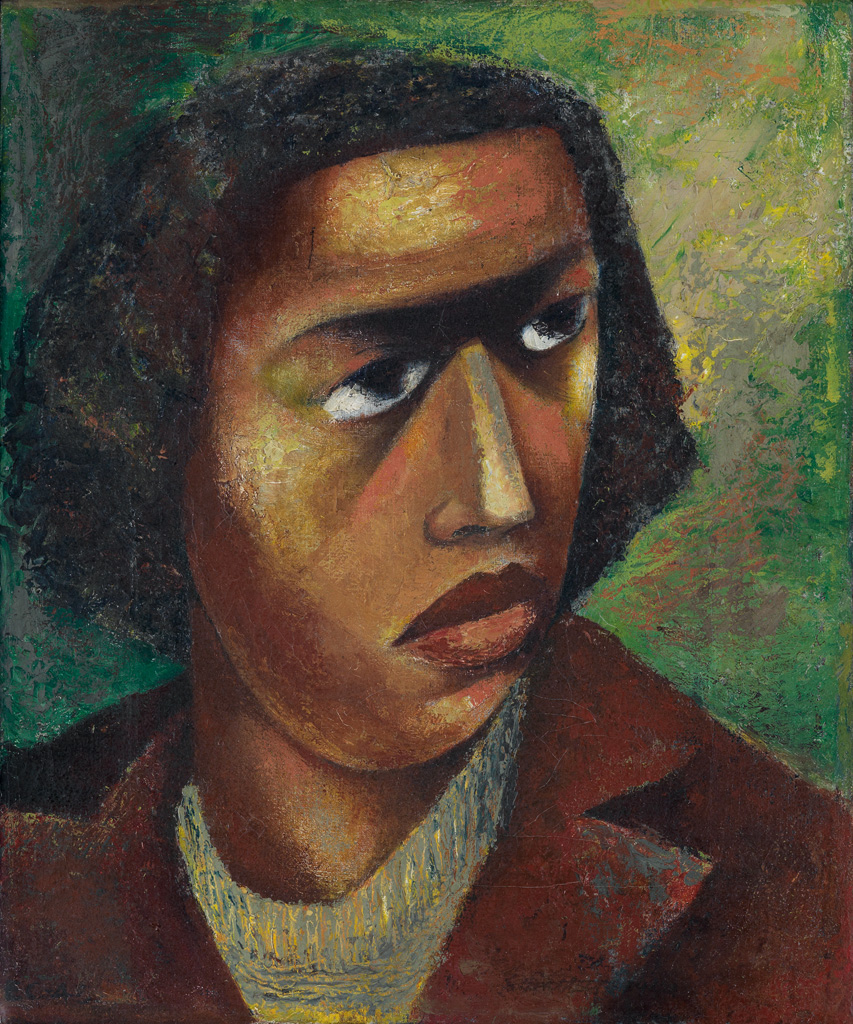
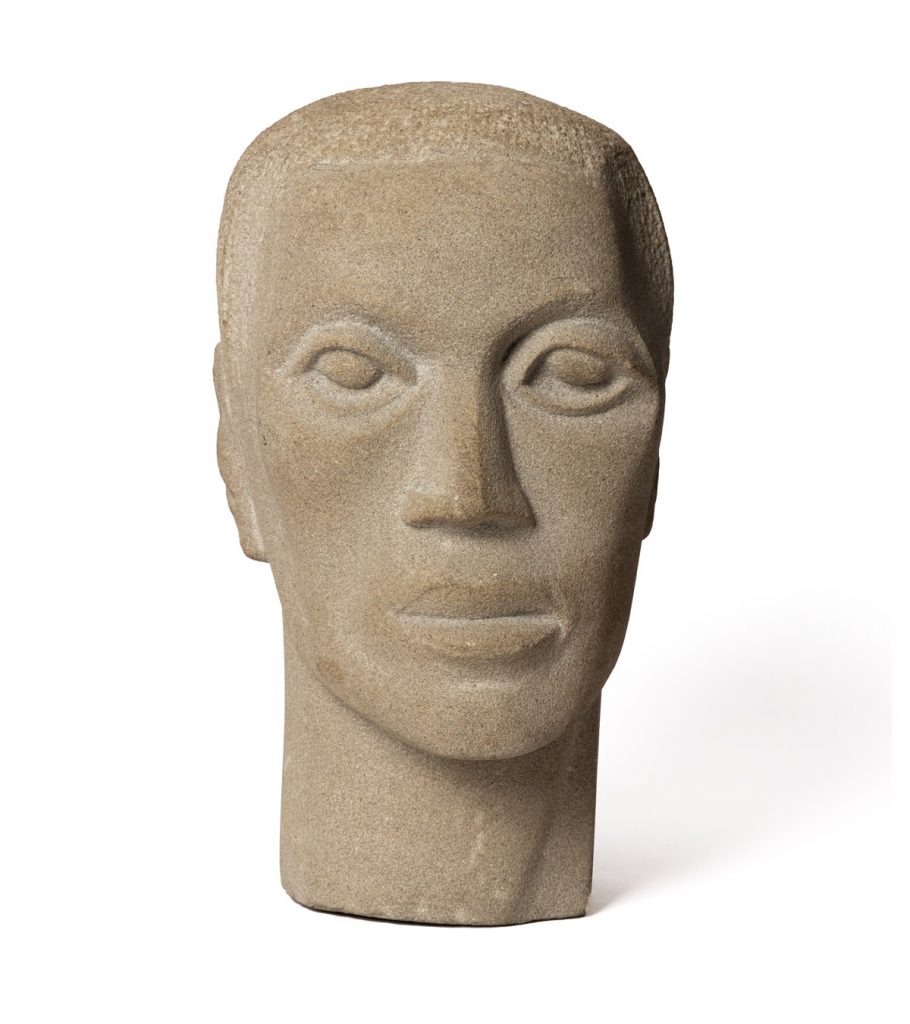
In 1942, Catlett moved to New York with her then-husband and fellow artist, Charles White, after their initial meeting in Chicago in 1941. Her first summer in New York, Catlett took private lessons and worked in the studio of the Russian modernist, Ossip Zadkine, who introduced her to the ideas of abstraction within sculpture. From 1944 to 1946, Catlett worked at the George Washington Carver School located in Harlem. There Catlett taught sculpture and sewing alongside White and other such artists as Gwendolyn Bennett, Ernest Crichlow and Norman Lewis. Actively teaching working class people in a progressive community school was an intimate experience that helped shape the social and political consciousness of her art. Her early oil painting Head of a Woman and stone sculpture Head reflect Catlett’s interest in both modernism and social realism.


The 1940s: Elizabeth Catlett’s Move to Mexico & Exploration of Printmaking

In 1946, upon winning a Julius Rosenwald Foundation Grant, Elizabeth Catlett left New York for Mexico City. There, between 1946 and 1947, she embarked on her monumental printmaking project, I am the Negro Woman series, while at the Taller de Grafica Popular. Catlett’s printmaking was inspired by the Mexican collaborative press and the political art it produced. For the first time, as Melanie Herzog writes, Catlett embedded herself in her artwork, as “through her naming, she transformed the artist/object relationship into one of profound identification,” inserting herself as an African American woman into a narrative whole.”1

Catlett’s series of 15 linoleum cuts was exhibited in December of 1947 at the Barnett-Aden Gallery in Washington, DC in her first solo exhibition — Paintings, Sculpture, and Prints of the Negro Woman. Also included were 11 paintings and four terracotta figures entitled Negro Woman, Tired, Cold, and Frustration. Her exhibition at the Black-owned gallery was a bold debut and a landmark in the history of African American art. The work presented illustrated a dynamic narrative of the shared identity and experience of African American women — Catlett’s women were everyday people who with rolled-up sleeves, persevered in the face of great obstacles.


Terracotta Sculpture


Elizabeth Catlett, Head, terracotta painted dark brown, 1947. Sold in 2013 for $173,000.


In her first full year of living in Mexico, Catlett also studied terracotta sculpture with Francisco Zuniga. That year she created the terracotta bust Head in which the inherent qualities of the medium help convey its beauty. This exquisite portrait of a young African American woman pays close attention to the surface of the hair and its rich color.


Sharecropper


The early 1950s continued to be an important period for Catlett — she continued to produce a large body of graphic work while also taking a break from sculpture to raise a young family. The artist would create her most recognizable work — the linoleum cut,  Sharecropper. Catlett first exhibited this now iconic print during 1952 in Atlanta as Negro Woman.

Sharecropper was also titled Cosechadora de Algodón when her print was illustrated in the journal Artes de México in 1957. Catlett’s mastery of the medium enabled her to deftly imbue her subjects with a social and political consciousness. Sharecropper is a heroic portrait of a woman tenant farmer that conveys both strength and sensitivity.2


Elizabeth Catlett, Cosechadora de Algodón (Sharecropper), linoleum cut, circa 1952. Sold in 2018 for $27,500.


Related Reading:


The 1950s: Focus on Natural Realism — Elizabeth Catlett’s Representation of Black Women

Catlett’s mid-career work continued to evolve in its representation of African American women. The above attractive portrait of a modern, young woman is an unusually large and scarce mid-century painting. Despite the post-war movement towards abstraction, Catlett’s work remained centered around the figure. This painting demonstrates Catlett’s transition from angular modernism in the late 1940s to a more natural realism in the 1950s. The following year, Catlett also returned to sculpture.


Elizabeth Catlett, Seated Woman, carved mahogany, 1962. Sold in 2019 for $389,000.
Now in the Collection of the Saint Louis Art Museum.

Catlett’s artistic representation of women reached new heights with her development of wood sculpture in the late 1950s. A significant contribution to wood carving, the above beautiful and complex mahogany sculpture demonstrates Catlett’s masterful technique and the work to follow. She first studied wood carving between 1955 and 1959 with sculptor, Jose L. Ruiz, at La Esmeralda in Mexico City. By 1962, Catlett had her first Mexican solo exhibition at Escuela Nacional de Artes Plàsticas, San Carlos, according to Melanie Herzog, where Catlett had become the first woman to teach sculpture in 1959. The same year, she also won the Tlatilco prize in Mexico’s first national sculpture biennial with her large-scale Figura, 1962, and became a Mexican citizen.3


The 1960s & Forward: An Amalgam of Social Realism & Modernism & Elizabeth Catlett’s Response to the Civil Rights Struggle


Elizabeth Catlett, Untitled (Civil Rights Protest), mixed media, 1974. Sold in 2019 for $118,750.


By 1960, Catlett’s artistry had transformed an amalgam of social realism and modernism into a unique aesthetic. She synthesized new techniques in both printmaking and sculpture inherited from her experience in Mexico. Her printmaking and sculpture would continue to evolve with her response to the Civil Rights struggle in the late 1960s. But her work would remain true to representing women, black women and herself.