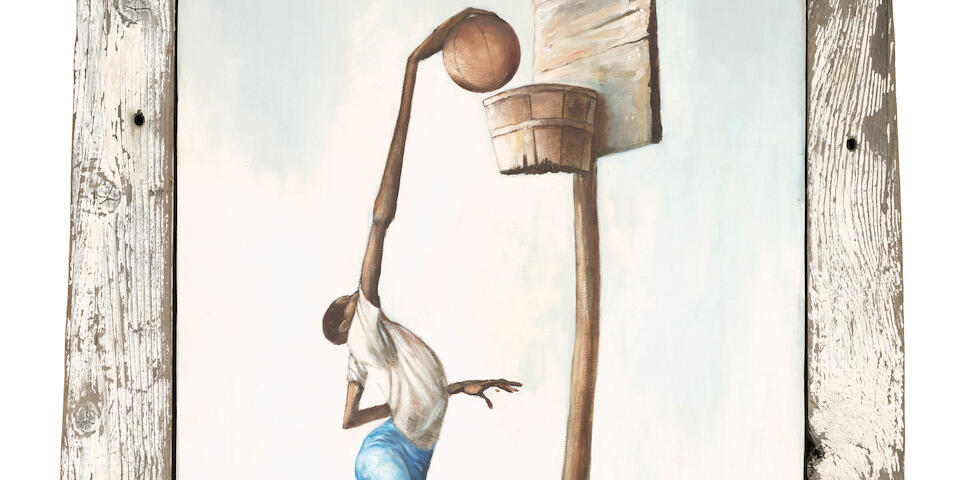
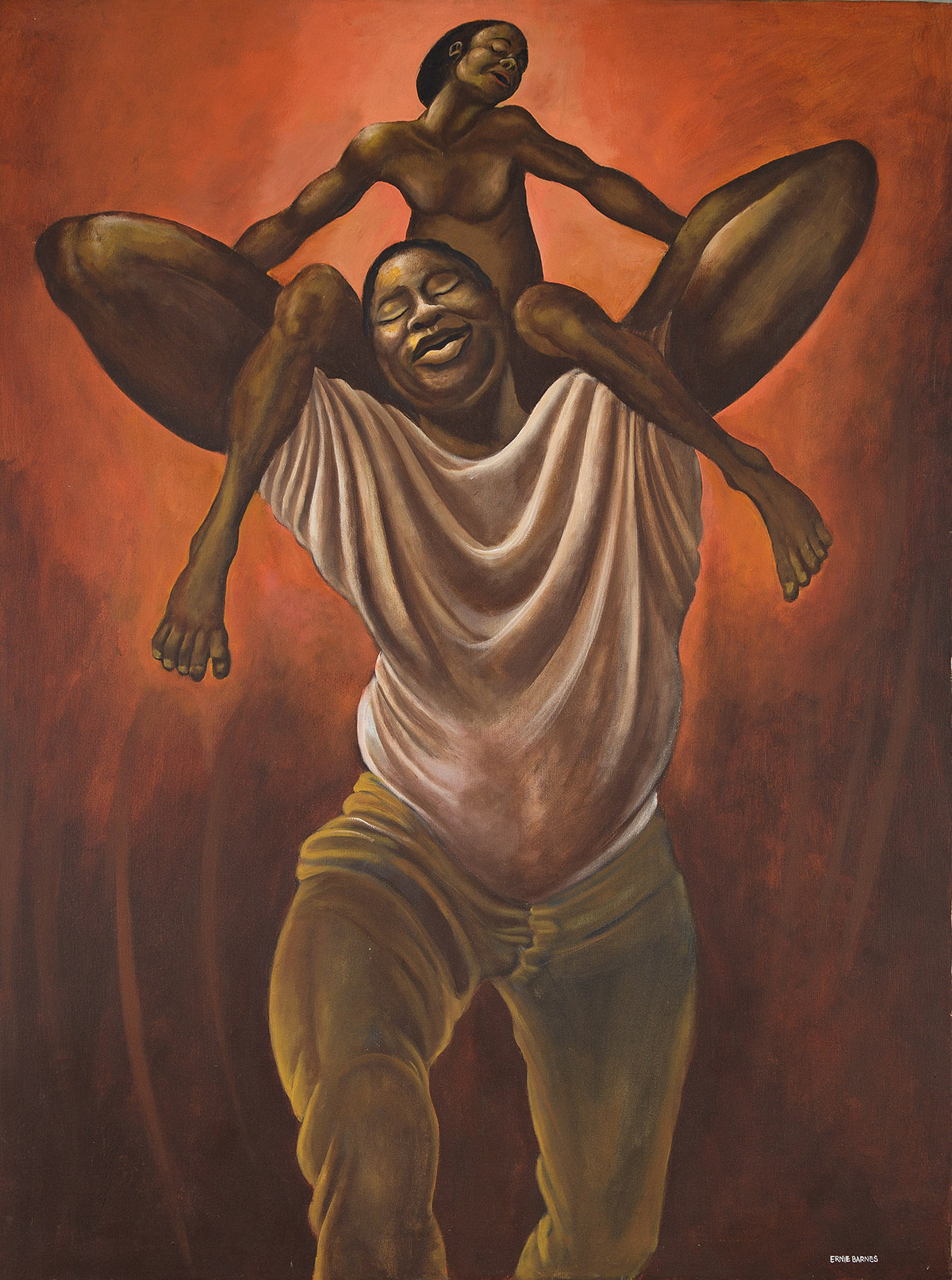
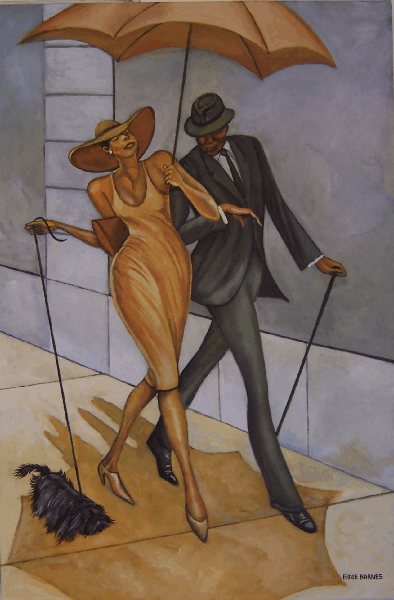
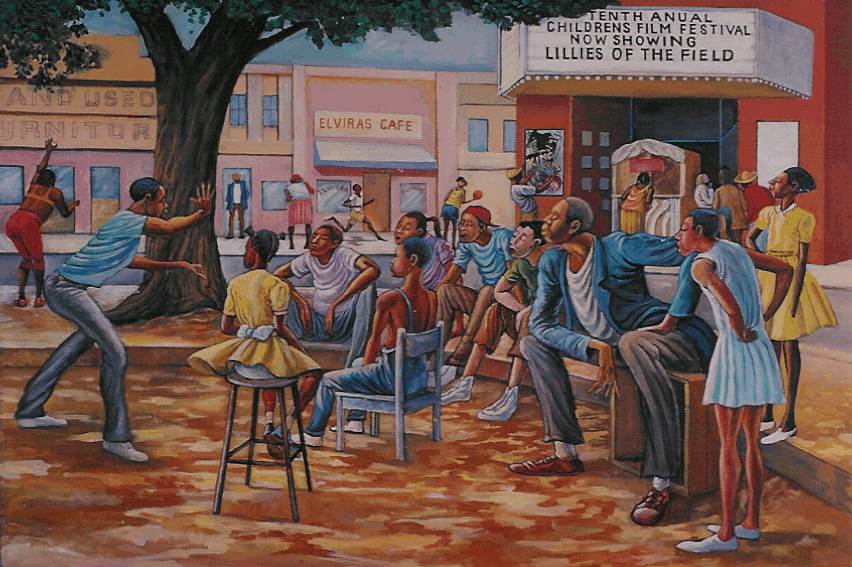
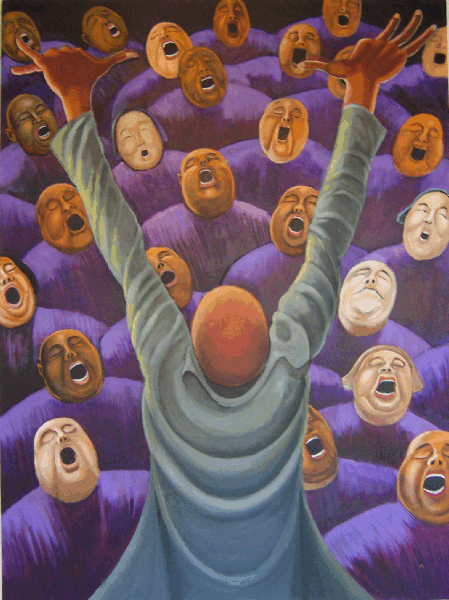
Ernie Barnes American, 1938–2008 "The Sugar Shack", 1971 Oil on canvas 48 x 36 in. (121.92 x 91.44 cm.) Ernie Barnes was a former NFL football player who turned to painting after his retirement in 1964. He was known for presenting figures through elongated forms in a unique neo-mannerist style. "The Sugar Shack" was used in the closing credits of the 1970s sitcom Good Times, as well as serving as the album cover of the Marvin Gaye recording "I Want You". Barnes was also the official artist of the 1984 Summer Olympic Games in Los Angeles Complete article Ernie Barnes, Full Boogie, 1978. Acrylic on canvas, 36 x 48 inches (91.4 x 121.9 cm). Courtesy of the Ernie Barnes Estate, Ortuzar Projects and Andrew Kreps Gallery. Complete article WANN GALLERIES | AFRICAN AMERICAN ART | APRIL 6 Ernie Barnes Leads Sale with ‘Daddy’ EST. $250,000 to $350,000 Ernie Barnes (1938-2009) The Gospel Truth, 1985. Estimate: £600,000 - 1,000,000. Photo: Bonhams. The Gospel Truth, a masterwork by Ernie Barnes (1938-2009) leads Bonhams’ Post-War & Contemporary Art sale on Thursday 13 October in New Bond Street, London. The work has an estimate of £600,000-1,000,000.Ralph Taylor, Bonhams Global Head of Post-War and Contemporary Art, commented: “The gospel hall paintings of Ernie Barnes have become some of the most renowned and sought-after works by the artist, and The Gospel Truth is arguably the finest example to come onto the market. Barnes' life and career has received renewed recognition since his retrospective at the California African American Museum in 2019. We are particularly excited to offer The Gospel Truth given Bonhams’ recent successes in selling masterpieces by Barnes – having achieved an impressive $1,620,375 for his Solid Rock Congregation (1993) earlier this month at Bonhams New York. This follows on from the strong result for The Maestro – which featured on the album cover of The Crusader's Ghetto Blaster (1984) – and sold at Bonhams American Art sale for $882,375 in May.” Barnes dedicated himself full-time to art following a career in professional football. He is known for elongated figures, capturing his observations of African American life growing up in North Carolina and living in Los Angeles. Barnes' work has appeared throughout pop culture on album covers, in television and movies. He was the official artist of the 1984 Summer Olympic Games in Los Angeles. Purchased from the artist by Tim Hauser, eight-time Grammy winner and founder of The Manhattan Transfer, the present work conveys a musical passion shared between two masters of their craft. Hauser was introduced to Barnes’ work by the bassist Kenny Gradney of Little Feat, who also came up with the work’s title, The Gospel Truth. The painting was acquired fresh from Barnes' easel and would be a brightening focal point of Hauser’s collection. One of the most remarkable gospel canvases, it comes to the market for the first time since its making, full of unique details and qualities that make it one of the most inspired paintings by the artist. Commenting on his relationship to sport and its impact on his practice, Barnes commented that "being an athlete helped me to formulate an analysis of movement, and movement is what I wanted to capture on canvas more than anything else.”
| ||||||||||||||||||
Saturday, May 14, 2022
Ernie Barnes
Monday, April 11, 2022
Elizabeth Catlett
I Am a Black Woman: Elizabeth Catlett & Representation in Art
Elizabeth Catlett’s landmark contributions to twentieth-century art begin in the 1940s with a new representation of African American women. Catlett was the first Modern artist who centered her identity as an African American woman and artist in her work. By the 1960s, through her painting, sculpture and printmaking, Catlett had created a unique and important voice in Modern art.
Early-Life
Elizabeth Catlett was born in Washington, D.C. in 1915. She received her undergraduate degree from Howard University in 1937 with the goal of being an art teacher. Following her interest in the paintings of Grant Wood, Catlett decided to enroll in the University of Iowa — where Wood taught — and was one of three students to receive the first MFAs from the program in 1940, and the first African American woman to do so. After earning her MFA Catlett split her time teaching between Dillard University in New Orleans and summers in Chicago. Catlett’s modern development as an artist began shortly after this time in the early 1940s of New York.


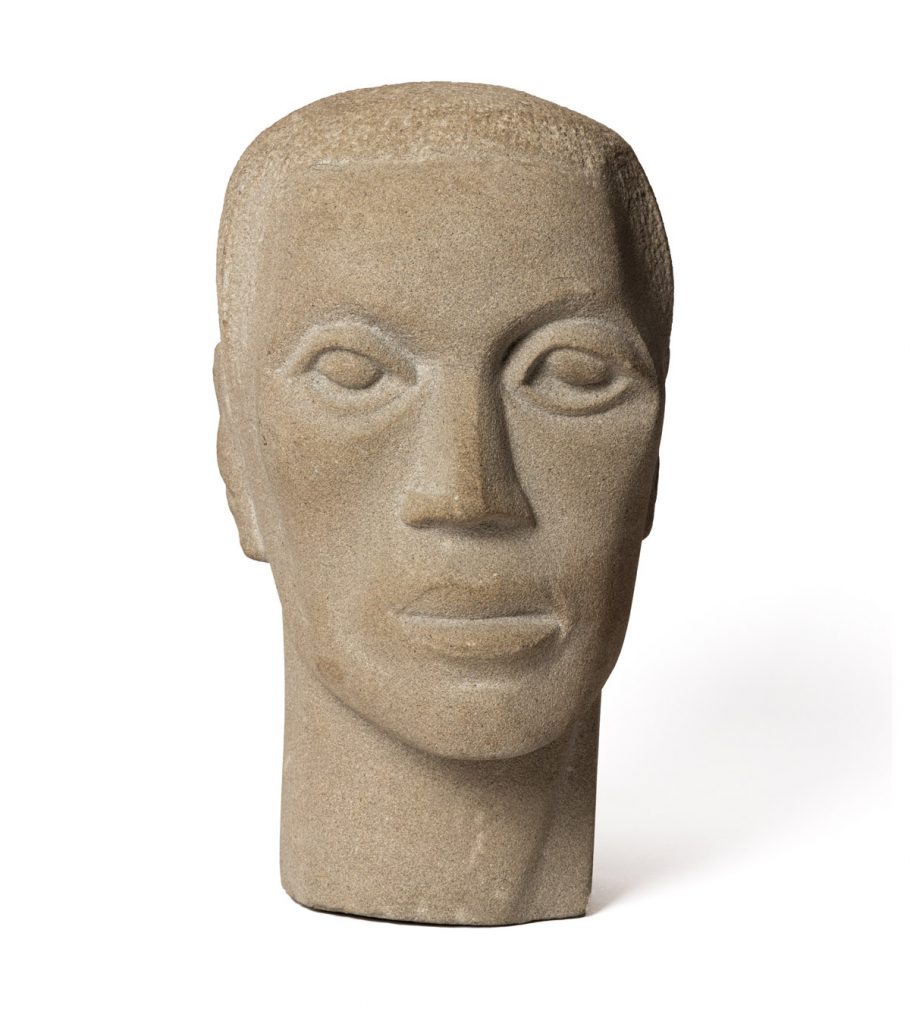
Elizabeth Catlett, Head, carved limestone, 1943. Sold in 2021 for $485,000, a record for Catlett.
Now in the Collection of the Art Institute of Chicago.
The 1940s: Elizabeth Catlett’s Time in New York
Now in the Collection of the Metroplitan Museum of Art.
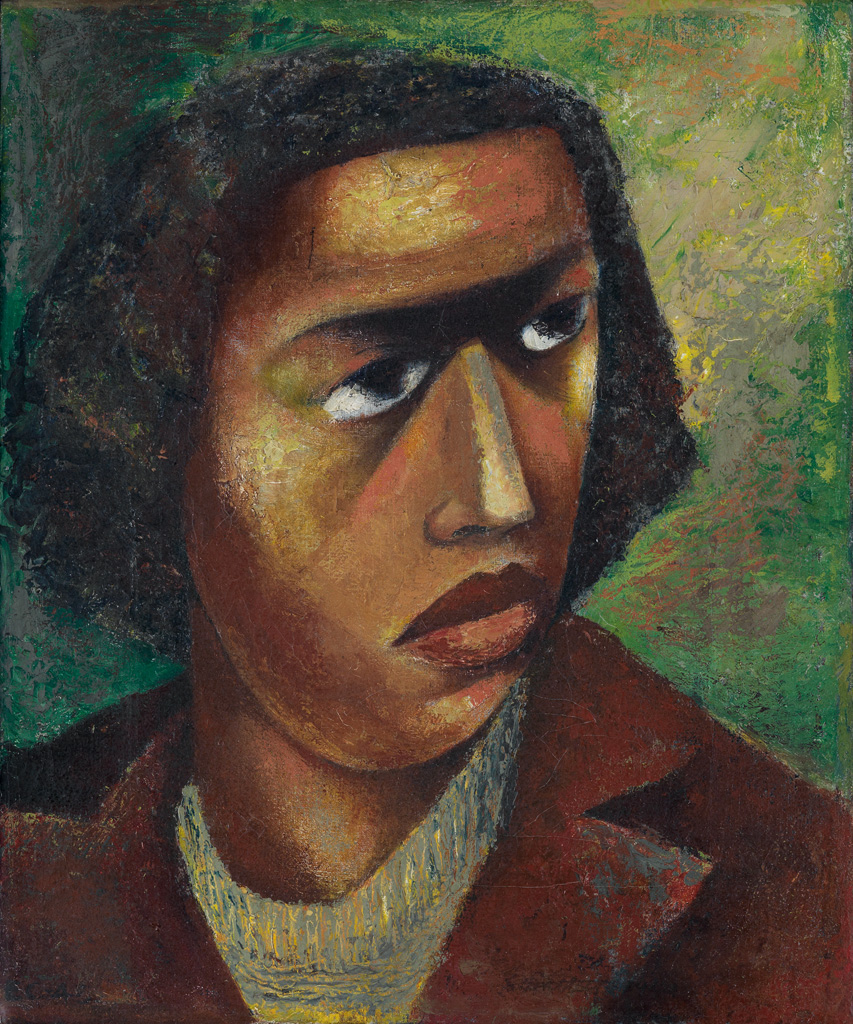
In 1942, Catlett moved to New York with her then-husband and fellow artist, Charles White, after their initial meeting in Chicago in 1941. Her first summer in New York, Catlett took private lessons and worked in the studio of the Russian modernist, Ossip Zadkine, who introduced her to the ideas of abstraction within sculpture. From 1944 to 1946, Catlett worked at the George Washington Carver School located in Harlem. There Catlett taught sculpture and sewing alongside White and other such artists as Gwendolyn Bennett, Ernest Crichlow and Norman Lewis. Actively teaching working class people in a progressive community school was an intimate experience that helped shape the social and political consciousness of her art. Her early oil painting Head of a Woman and stone sculpture Head reflect Catlett’s interest in both modernism and social realism.
The 1940s: Elizabeth Catlett’s Move to Mexico & Exploration of Printmaking
In 1946, upon winning a Julius Rosenwald Foundation Grant, Elizabeth Catlett left New York for Mexico City. There, between 1946 and 1947, she embarked on her monumental printmaking project, I am the Negro Woman series, while at the Taller de Grafica Popular. Catlett’s printmaking was inspired by the Mexican collaborative press and the political art it produced. For the first time, as Melanie Herzog writes, Catlett embedded herself in her artwork, as “through her naming, she transformed the artist/object relationship into one of profound identification,” inserting herself as an African American woman into a narrative whole.”1
Catlett’s series of 15 linoleum cuts was exhibited in December of 1947 at the Barnett-Aden Gallery in Washington, DC in her first solo exhibition — Paintings, Sculpture, and Prints of the Negro Woman. Also included were 11 paintings and four terracotta figures entitled Negro Woman, Tired, Cold, and Frustration. Her exhibition at the Black-owned gallery was a bold debut and a landmark in the history of African American art. The work presented illustrated a dynamic narrative of the shared identity and experience of African American women — Catlett’s women were everyday people who with rolled-up sleeves, persevered in the face of great obstacles.
Terracotta Sculpture
Elizabeth Catlett, Head, terracotta painted dark brown, 1947. Sold in 2013 for $173,000.
In her first full year of living in Mexico, Catlett also studied terracotta sculpture with Francisco Zuniga. That year she created the terracotta bust Head in which the inherent qualities of the medium help convey its beauty. This exquisite portrait of a young African American woman pays close attention to the surface of the hair and its rich color.
Sharecropper
The early 1950s continued to be an important period for Catlett — she continued to produce a large body of graphic work while also taking a break from sculpture to raise a young family. The artist would create her most recognizable work — the linoleum cut, Sharecropper. Catlett first exhibited this now iconic print during 1952 in Atlanta as Negro Woman.
Sharecropper was also titled Cosechadora de Algodón when her print was illustrated in the journal Artes de México in 1957. Catlett’s mastery of the medium enabled her to deftly imbue her subjects with a social and political consciousness. Sharecropper is a heroic portrait of a woman tenant farmer that conveys both strength and sensitivity.2
Elizabeth Catlett, Cosechadora de Algodón (Sharecropper), linoleum cut, circa 1952. Sold in 2018 for $27,500.
Related Reading:
The 1950s: Focus on Natural Realism — Elizabeth Catlett’s Representation of Black Women
Catlett’s mid-career work continued to evolve in its representation of African American women. The above attractive portrait of a modern, young woman is an unusually large and scarce mid-century painting. Despite the post-war movement towards abstraction, Catlett’s work remained centered around the figure. This painting demonstrates Catlett’s transition from angular modernism in the late 1940s to a more natural realism in the 1950s. The following year, Catlett also returned to sculpture.
Now in the Collection of the Saint Louis Art Museum.
Catlett’s artistic representation of women reached new heights with her development of wood sculpture in the late 1950s. A significant contribution to wood carving, the above beautiful and complex mahogany sculpture demonstrates Catlett’s masterful technique and the work to follow. She first studied wood carving between 1955 and 1959 with sculptor, Jose L. Ruiz, at La Esmeralda in Mexico City. By 1962, Catlett had her first Mexican solo exhibition at Escuela Nacional de Artes Plàsticas, San Carlos, according to Melanie Herzog, where Catlett had become the first woman to teach sculpture in 1959. The same year, she also won the Tlatilco prize in Mexico’s first national sculpture biennial with her large-scale Figura, 1962, and became a Mexican citizen.3
The 1960s & Forward: An Amalgam of Social Realism & Modernism & Elizabeth Catlett’s Response to the Civil Rights Struggle
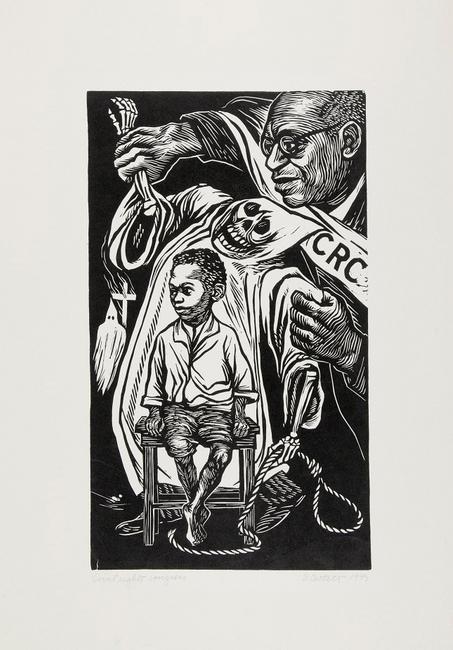
Elizabeth Catlett, Untitled (Civil Rights Protest), mixed media, 1974. Sold in 2019 for $118,750.
By 1960, Catlett’s artistry had transformed an amalgam of social realism and modernism into a unique aesthetic. She synthesized new techniques in both printmaking and sculpture inherited from her experience in Mexico. Her printmaking and sculpture would continue to evolve with her response to the Civil Rights struggle in the late 1960s. But her work would remain true to representing women, black women and herself.
Monday, January 24, 2022
A Site of Struggle: American Art against Anti-Black Violence
The Mary and Leigh Block Museum of Art at Northwestern University
Jan. 26 to July 10, 2022
seeks to address this and related questions as it considers the long history of American artistic engagement with anti-Black violence. From the anti-lynching campaigns of the 1890s to the founding of Black Lives Matter in 2013 and up to today, (2)

“How can art history help inform our understanding of the deep roots of racial violence?” asks curator Janet Dees. A new exhibition debuting later this month at The Mary and Leigh Block Museum of Art at Northwestern University seeks to address this and related questions as it considers the long history of American artistic engagement with anti-Black violence. From the anti-lynching campaigns of the 1890s to the founding of Black Lives Matter in 2013 and up to today, A Site of Struggle: American Art against Anti-Black Violence (Jan. 26 to July 10, 2022) evokes the unbroken history of violence against African Americans in the United States and highlights African Americans as active shapers of visual discourse. Organized by The Block, the exhibition includes approximately 65 works of art and ephemera on loan from private and public collections across the country. With an emphasis on how art has been used to protest, process, mourn and memorialize anti-Black violence, A Site of Struggle stakes a claim on the power of the visual to make change.

“From realism to abstraction, from direct to more subtle approaches, American artists have developed a century of tools and creative strategies to stand against enduring images of African American suffering and death,” said exhibition curator Dees. “Contemporary artists taking on this subject are doing so within a long and rich history of American art and visual culture that has sought to contend with the realities of anti-Black violence.”
The Block Museum of Art has achieved national acclaim for curating groundbreaking traveling exhibitions and authoring scholarly publications that focus on crucial but understudied art histories and ask audiences to rethink assumptions about whose and what stories are told. A Site of Struggle builds on this legacy and The Block’s commitment to developing new scholarship in the field of American art.
“The Block Museum of Art is committed to developing bold, meaningful and challenging projects that ask audiences to reconsider accepted narratives and search for new modes of understanding and active reflection,” said Lisa Corrin, The Block Museum Ellen Philips Katz director. “In its breadth of scholarly and community collaborations and support of the museum’s ongoing social justice initiatives, A Site of Struggle is one of the most important exhibitions the institution has ever undertaken.”
The Evanston and Chicago areas are sites of several current ant-violence movements and a hub of historical African American activism and cultural production. The narrative of A Site of Struggle intersects with these efforts and histories in important ways. For example, Chicago was the home of Ida B. Wells (1862-1931), an anti-lynching activist and one of the founders of the NAACP, whose 1895 pamphlet A Red Record: Tabulated Statistics and Alleged Cause of Lynching in the United States 1892-1893-1894 influenced one of the exhibition’s key themes.
Five years in the planning, A Site of Struggle was developed from the perspective that anti-Black violence is not a new subject in American art. The exhibition and related publication are in part inspired by the recurrence of the phrase “a site of struggle” in Courtney R. Baker’s Humane Insight: Looking at Images of African American Suffering and Death (2015) and Leigh Raiford’s Imprisoned in a Luminous Glare: Photography and the African American Freedom Struggle (2011).

The exhibition is divided into three sections that are organized thematically around different artistic approaches, visual strategies and lines of inquiry across time periods.
A Red Record explores how graphic depictions of violence were enlisted as a form of protest and awareness raising. Works such as George Wesley Bellows’ lithograph The Law Is Too Slow (1923), Norman Lewis’ watercolor Untitled (Police Beating) (1943) and Accused/Blowtorch/Padlock (1986) by Pat Ward Williams represent the horrors and implications of anti-Black violence.
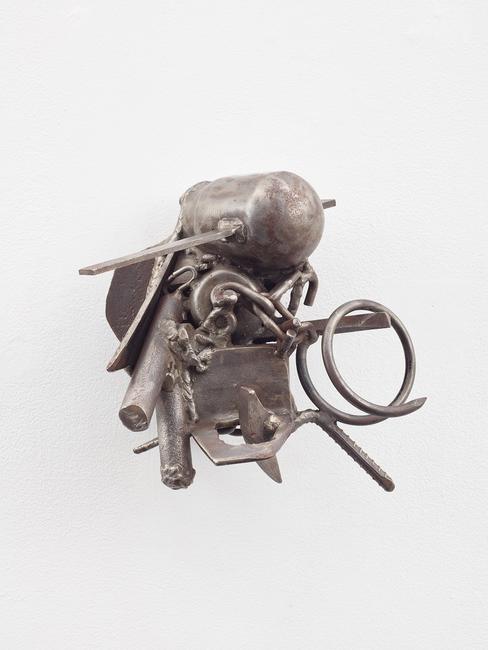
In Abstraction and Affect artists employ conceptual strategies and varying degrees of abstraction to avoid literal representation of violence. Examples include Christian Marclay’s 2000 video Guitar Drag, informed by the dragging death of James Byrd, Jr. in 1998; Theaster Gates’ decommissioned firehoses (Minority Majority of 2012), which have been used as weapons against civil rights protesters; and Paul Rucker’s Soundless series (2015) of sculpted wood forms that serve as racial violence memorials.
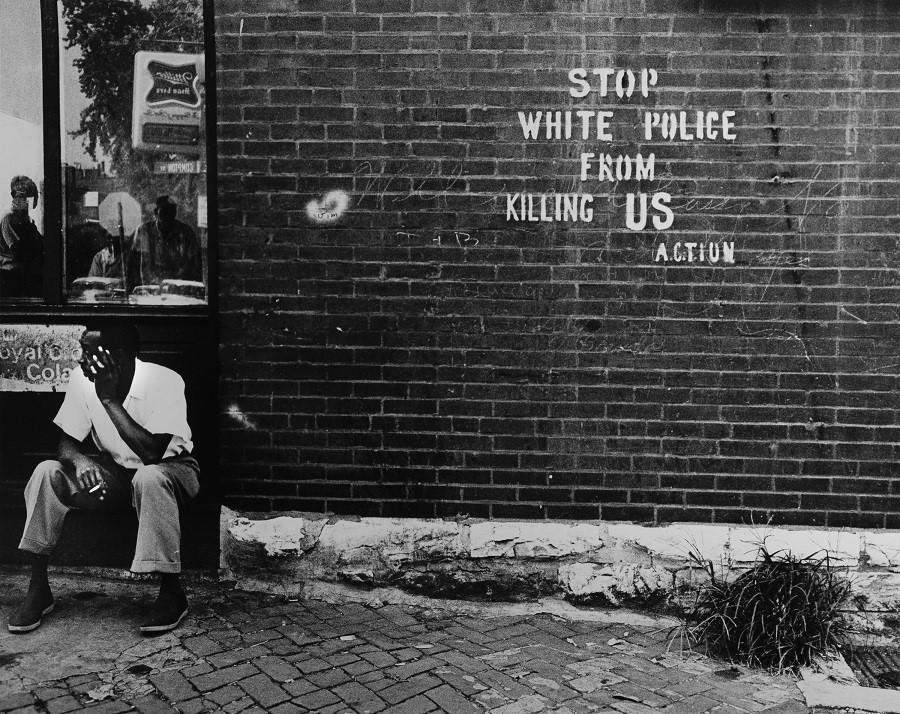
Written on the Body explores subtler allusions to and forms of violence, such as psychological impacts of racism, through engagement with the body. An anchor in this final section of the exhibition is Carl and Karen Pope’s body art video work Palimpsest (1998-99), which consists of edited footage of three permanent modifications that the artist Carl Pope made to his body. Other works featured here are Darryl Cowherd’s photograph Stop White Police from Killing Us-St. Louis, MO (c. 1966-67) and Untitled (Two Necklines) (1989), Lorna Simpson’s evocative text and photograph juxtaposition.
While the exhibition does not directly address recent acts of anti-Black violence of the last eight years and the impactful art made in response, the current climate informs the exhibition’s presentation and the resources provided to visitors. Through the examination of different artistic strategies and visual choices artists and activists have used to contend with this violence over a 100+ year period of American art, the project provides deeper context for contemporary debates and current movements for justice.

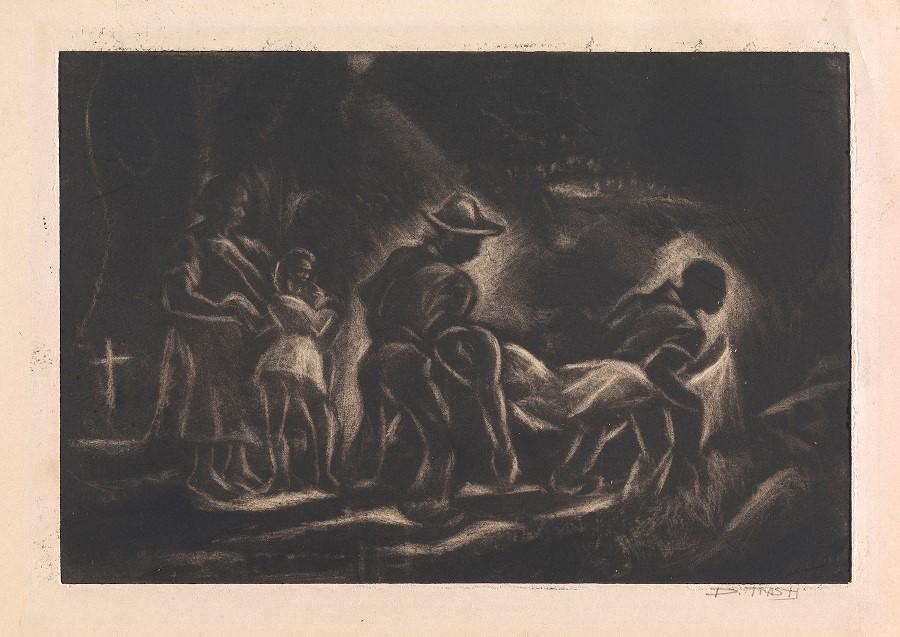
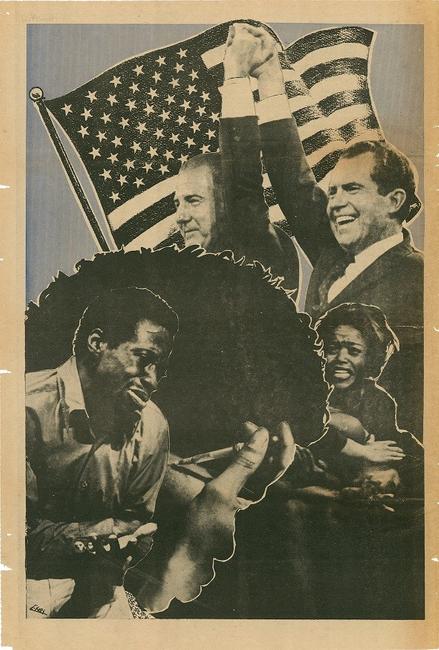
The artists whose works are included in A Site of Struggle are Laylah Ali (American, b.1968), George Wesley Bellows (American, 1882-1925), George Biddle (American 1885-1973), Elizabeth Catlett (American, 1915-2012), Darryl Cowherd (American, b. 1940), Bob Crawford (American, 1938-2015), Ernest Crichlow (American, 1914-2005), David Antonio Cruz (American, b. 1974), Emory Douglas (American, b. 1943), Melvin Edwards (American, b. 1937), Theaster Gates (American, b. 1973), Ken Gonzales-Day (American, b. 1964), Wilmer Jennings (American, 1910-1990), Norman Lewis, (American, 1909-1979), Christian Marclay (American, b. 1955), Kerry James Marshall (American, b. 1955), Isamu Noguchi (American, 1904-1988), Mendi + Keith Obadike (American, b. 1973), Howardena Pindell (American b. 1943), Carl and Karen Pope (American, b. 1961), Walter Quirt (American, 1902-1968), Paul Rucker (American, b. 1968), Lorna Simpson (American, b. 1960), Dox Thrash (American, 1893-1965), Molly Jae Vaughan (British, b. 1977), Lynd Ward (American, 1905–1985), Pat Ward Williams (American, b. 1948), Carrie Mae Weems (American, b. 1953), Ida B. Wells (American, 1862-1931), Walter White (American, 1893-1955) and Hale Woodruff (American, 1900-1980).
After its premiere at The Block, the exhibition will appear at the Montgomery Museum of Fine Arts in Montgomery, Alabama, from Aug. 12 through Nov. 6, 2022. Montgomery is an important city in the history of the battle for African American civil rights in the United States, and includes many important landmark institutions such as Martin Luther King’s Dexter Avenue Baptist Church. It is the home of the Equal Justice Initiative’s Legacy Museum and National Memorial for Peace and Justice, which memorializes thousands of lynchings that occurred across the U.S.