seeks to address this and related questions as it considers the long history of American artistic engagement with anti-Black violence. From the anti-lynching campaigns of the 1890s to the founding of Black Lives Matter in 2013 and up to today,(2)
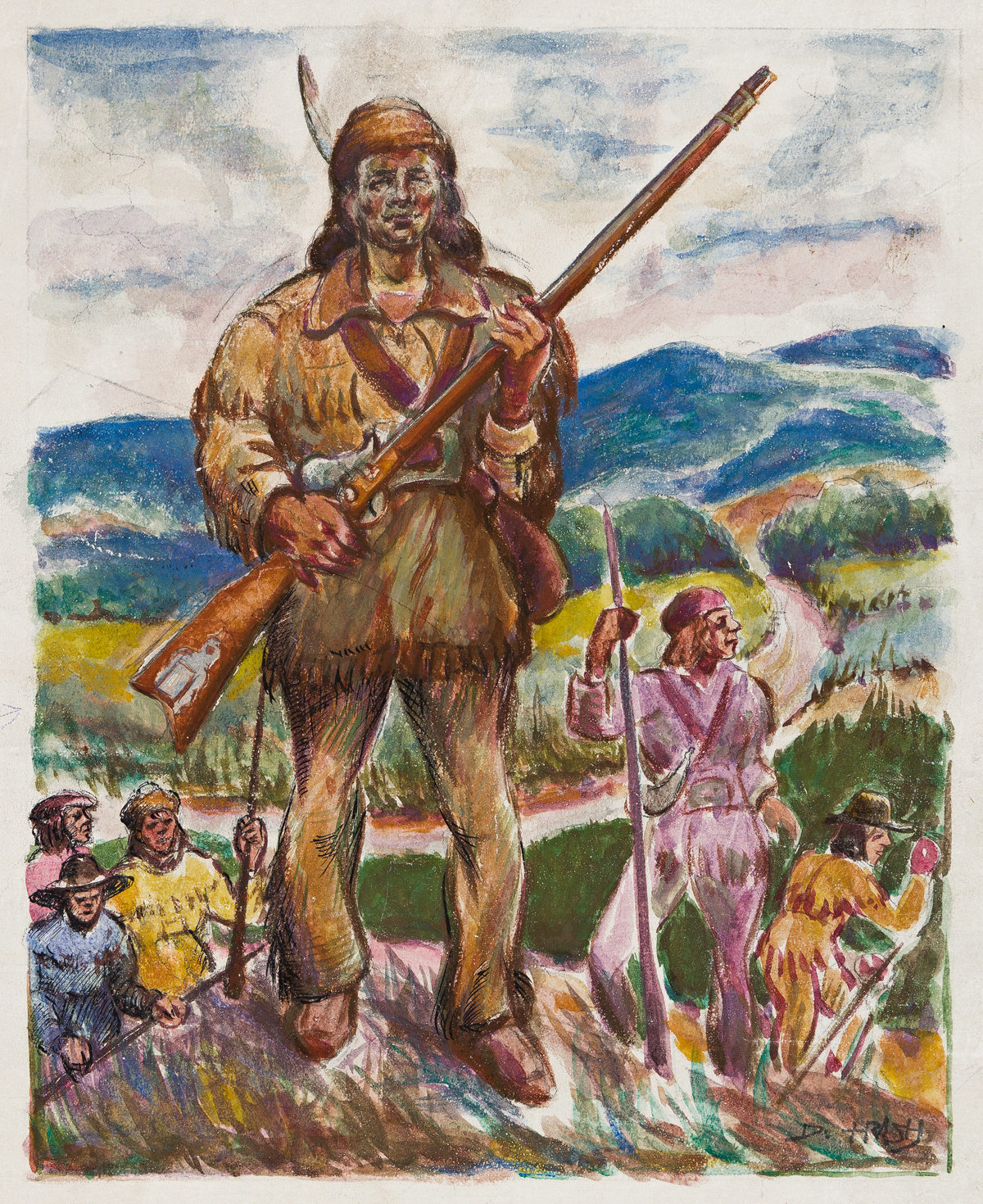
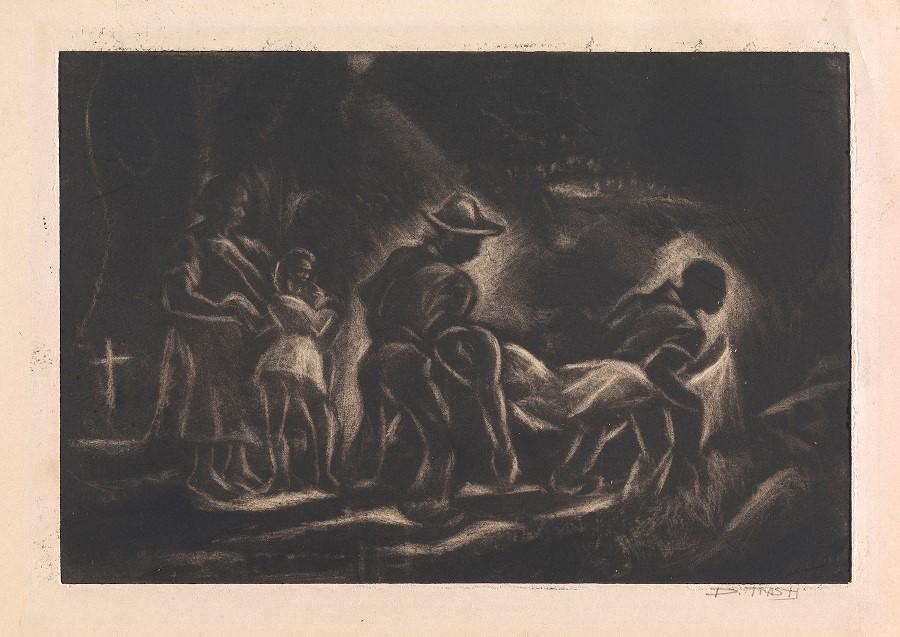
Dox Thrash, After the Lynching, late 1930s. Carborundum mezzotint. 5 15/16 × 8 15/16 in. Courtesy of the Virginia Museum of Fine Arts.
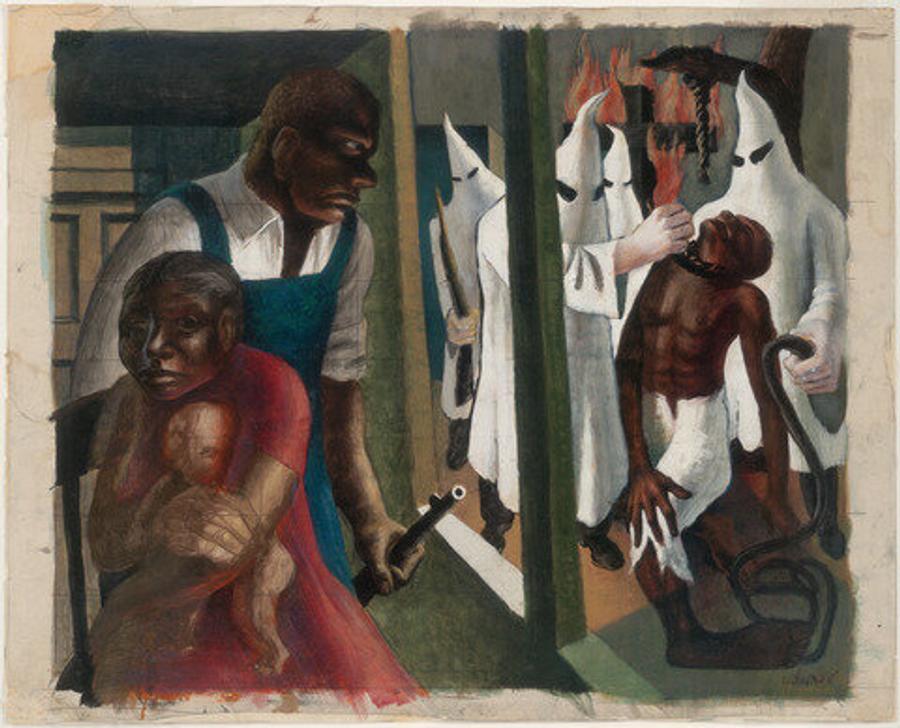
“How can art history help inform our understanding of the deep roots of racial violence?” asks curator Janet Dees. A new exhibition debuting later this month at The Mary and Leigh Block Museum of Art at Northwestern University seeks to address this and related questions as it considers the long history of American artistic engagement with anti-Black violence. From the anti-lynching campaigns of the 1890s to the founding of Black Lives Matter in 2013 and up to today, A Site of Struggle: American Art against Anti-Black Violence (Jan. 26 to July 10, 2022) evokes the unbroken history of violence against African Americans in the United States and highlights African Americans as active shapers of visual discourse. Organized by The Block, the exhibition includes approximately 65 works of art and ephemera on loan from private and public collections across the country. With an emphasis on how art has been used to protest, process, mourn and memorialize anti-Black violence, A Site of Struggle stakes a claim on the power of the visual to make change.
“From realism to abstraction, from direct to more subtle approaches, American artists have developed a century of tools and creative strategies to stand against enduring images of African American suffering and death,” said exhibition curator Dees. “Contemporary artists taking on this subject are doing so within a long and rich history of American art and visual culture that has sought to contend with the realities of anti-Black violence.”
The Block Museum of Art has achieved national acclaim for curating groundbreaking traveling exhibitions and authoring scholarly publications that focus on crucial but understudied art histories and ask audiences to rethink assumptions about whose and what stories are told. A Site of Struggle builds on this legacy and The Block’s commitment to developing new scholarship in the field of American art.
“The Block Museum of Art is committed to developing bold, meaningful and challenging projects that ask audiences to reconsider accepted narratives and search for new modes of understanding and active reflection,” said Lisa Corrin, The Block Museum Ellen Philips Katz director. “In its breadth of scholarly and community collaborations and support of the museum’s ongoing social justice initiatives, A Site of Struggle is one of the most important exhibitions the institution has ever undertaken.”
The Evanston and Chicago areas are sites of several current ant-violence movements and a hub of historical African American activism and cultural production. The narrative of A Site of Struggle intersects with these efforts and histories in important ways. For example, Chicago was the home of Ida B. Wells (1862-1931), an anti-lynching activist and one of the founders of the NAACP, whose 1895 pamphlet A Red Record: Tabulated Statistics and Alleged Cause of Lynching in the United States 1892-1893-1894 influenced one of the exhibition’s key themes.
Five years in the planning, A Site of Struggle was developed from the perspective that anti-Black violence is not a new subject in American art. The exhibition and related publication are in part inspired by the recurrence of the phrase “a site of struggle” in Courtney R. Baker’s Humane Insight: Looking at Images of African American Suffering and Death (2015) and Leigh Raiford’s Imprisoned in a Luminous Glare: Photography and the African American Freedom Struggle (2011).
The exhibition is divided into three sections that are organized thematically around different artistic approaches, visual strategies and lines of inquiry across time periods.
A Red Record explores how graphic depictions of violence were enlisted as a form of protest and awareness raising. Works such as George Wesley Bellows’ lithograph The Law Is Too Slow (1923), Norman Lewis’ watercolor Untitled (Police Beating) (1943) and Accused/Blowtorch/Padlock (1986) by Pat Ward Williams represent the horrors and implications of anti-Black violence.
In Abstraction and Affect artists employ conceptual strategies and varying degrees of abstraction to avoid literal representation of violence. Examples include Christian Marclay’s 2000 video Guitar Drag, informed by the dragging death of James Byrd, Jr. in 1998; Theaster Gates’ decommissioned firehoses (Minority Majority of 2012), which have been used as weapons against civil rights protesters; and Paul Rucker’s Soundless series (2015) of sculpted wood forms that serve as racial violence memorials.
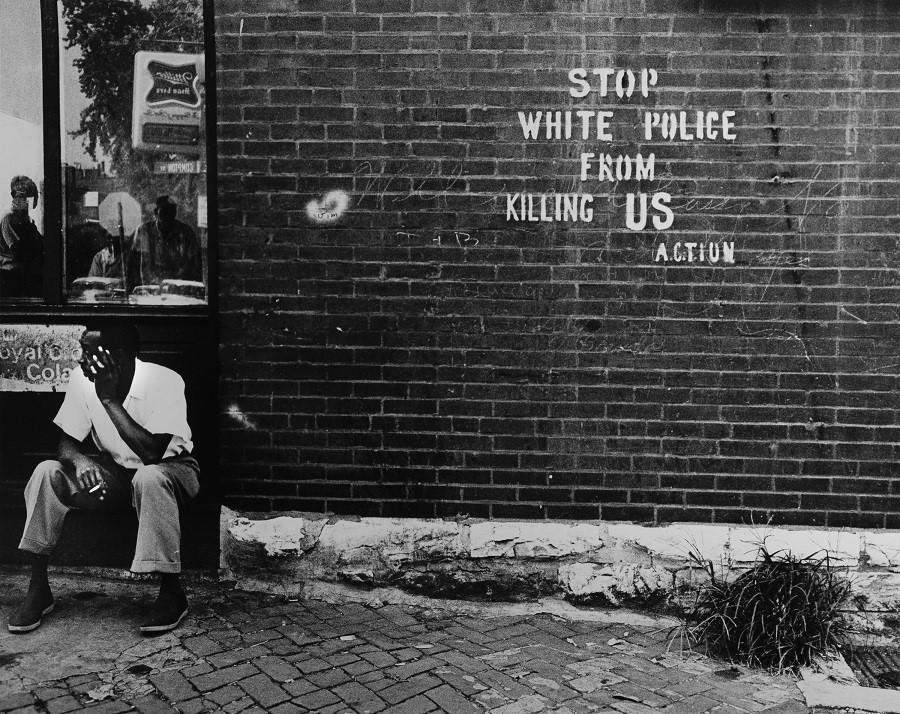
Written on the Body explores subtler allusions to and forms of violence, such as psychological impacts of racism, through engagement with the body. An anchor in this final section of the exhibition is Carl and Karen Pope’s body art video work Palimpsest (1998-99), which consists of edited footage of three permanent modifications that the artist Carl Pope made to his body. Other works featured here are Darryl Cowherd’s photograph Stop White Police from Killing Us-St. Louis, MO (c. 1966-67) and Untitled (Two Necklines) (1989), Lorna Simpson’s evocative text and photograph juxtaposition.
While the exhibition does not directly address recent acts of anti-Black violence of the last eight years and the impactful art made in response, the current climate informs the exhibition’s presentation and the resources provided to visitors. Through the examination of different artistic strategies and visual choices artists and activists have used to contend with this violence over a 100+ year period of American art, the project provides deeper context for contemporary debates and current movements for justice.
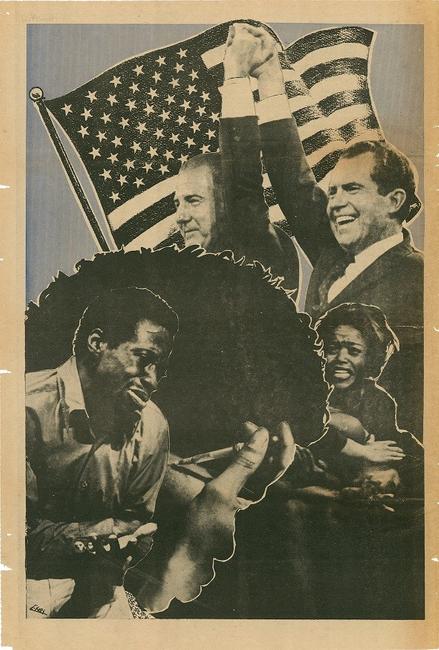
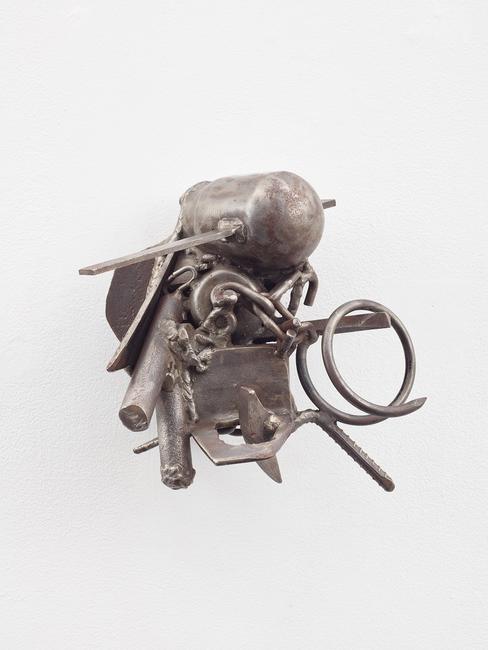
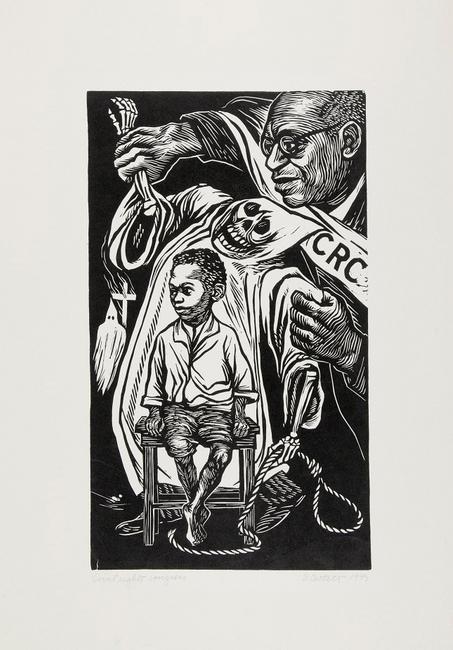
The artists whose works are included in A Site of Struggle are Laylah Ali (American, b.1968), George Wesley Bellows (American, 1882-1925), George Biddle (American 1885-1973), Elizabeth Catlett (American, 1915-2012), Darryl Cowherd (American, b. 1940), Bob Crawford (American, 1938-2015), Ernest Crichlow (American, 1914-2005), David Antonio Cruz (American, b. 1974), Emory Douglas (American, b. 1943), Melvin Edwards (American, b. 1937), Theaster Gates (American, b. 1973), Ken Gonzales-Day (American, b. 1964), Wilmer Jennings (American, 1910-1990), Norman Lewis, (American, 1909-1979), Christian Marclay (American, b. 1955), Kerry James Marshall (American, b. 1955), Isamu Noguchi (American, 1904-1988), Mendi + Keith Obadike (American, b. 1973), Howardena Pindell (American b. 1943), Carl and Karen Pope (American, b. 1961), Walter Quirt (American, 1902-1968), Paul Rucker (American, b. 1968), Lorna Simpson (American, b. 1960), Dox Thrash (American, 1893-1965), Molly Jae Vaughan (British, b. 1977), Lynd Ward (American, 1905–1985), Pat Ward Williams (American, b. 1948), Carrie Mae Weems (American, b. 1953), Ida B. Wells (American, 1862-1931), Walter White (American, 1893-1955) and Hale Woodruff (American, 1900-1980).
After its premiere at The Block, the exhibition will appear at the Montgomery Museum of Fine Arts in Montgomery, Alabama, from Aug. 12 through Nov. 6, 2022. Montgomery is an important city in the history of the battle for African American civil rights in the United States, and includes many important landmark institutions such as Martin Luther King’s Dexter Avenue Baptist Church. It is the home of the Equal Justice Initiative’s Legacy Museum and National Memorial for Peace and Justice, which memorializes thousands of lynchings that occurred across the U.S.
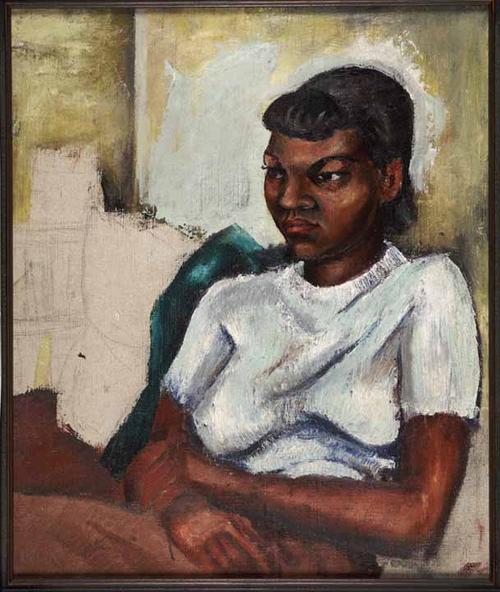
Laura Wheeler Waring, Portrait of Alma Thomas, ca. 1945, oil on canvas, Smithsonian American Art Museum, Gift of Vincent Melzac 1977.121.
Name
Alma Thomas
Also Known as
Alma Woodsey Thomas
Alma W. Thomas
Born
Columbus, Georgia 1891
Died
Washington, District of Columbia 1978
Nationalities
American
Linked Open Data
During the 1960s Alma Thomas emerged as an exuberant colorist, abstracting shapes and patterns from the trees and flowers around her. Her new palette and technique—considerably lighter and looser than in her earlier representational works and dark abstractions—reflected her long study of color theory and the watercolor medium.
Red Sunset, Old Pond Concerto [SAAM, 1977.48.5] emphasizes the intensity of a sunset as it overtakes a landscape, penetrating layers of greenery to strike darkening water. Broken rows of color pats, a hallmark of her mature style, alternate with emphatic vertical bands. Their irregular intervals create a visual rhythm akin to music, while dappled reds, greens, and blue-blacks orchestrate subtle nuances and dramatic contrasts. Thomas frequently talked about “watching the leaves and flowers tossing in the wind as though they were singing and dancing.” She also liked to imagine seeing natural forms from a plane. Her lyrical interpretation of a pond at sunset suggests a blending of these two perspectives.
As a black woman artist, Thomas encountered many barriers; she did not, however, turn to racial or feminist issues in her art, believing rather that the creative spirit is independent of race or gender. In Washington, D.C., where she lived and worked after 1921, Thomas became identified with Morris Louis, Gene Davis, and other Color Field painters active in the area since the 1950s. Like them, she explored the power of color and form in luminous, contemplative paintings.
Lynda Roscoe Hartigan African-American Art: 19th and 20th-Century Selections (brochure. Washington, D.C.: National Museum of American Art)
“Man’s highest aspirations come from nature. A world without color would seem dead. Color is life. Light is the mother of color. Light reveals to us the spirit and living soul of the world through colors.”—Press Release, Columbus Museum of Arts and Sciences, 1982, for an exhibition entitled A Life in Art: Alma Thomas 1891–1978, Vertical File, Library, National Museum of American Art, Smithsonian Institution, Washington, D.C.
Alma Thomas began to paint seriously in 1960, when she retired from her thirty-eight year career as an art teacher in the public schools of Washington, D.C. In the years that followed she would come to be regarded as a major painter of the Washington Color Field School.
Born on September 22, 1891, in Columbus, Georgia, Thomas was the eldest of four daughters. Her father worked in a church and her mother was a seamstress and homemaker. Thomas’s family was well respected in Columbus, and she and her sisters grew up in comfortable surroundings. The family lived in a large Victorian house high on a hill overlooking the town where Thomas spent her childhood observing the beauty and color of nature. In 1907, when Thomas was fifteen years old, her father moved the family to Washington, D.C. She enrolled in Howard University, and in 1924 became the first graduate of its newly formed art department. Thomas’s teacher and mentor, James V. Herring, granted her use of his private art library, from which she gained a thorough background in art history. A decade later, she earned a Master of Arts degree in education from Columbia University.
During the 1950s Thomas attended art classes at American University in Washington. She studied painting under Joe Summerford, Robert Gates, and Jacob Kainen, and developed an interest in color and abstract art. Throughout her teaching career she painted and exhibited academic still lifes and realistic paintings in group shows of African-American artists. Although her paintings were competent, they were never singled out for individual recognition.
Suffering from the pain of arthritis at the time of her retirement, she considered giving up painting. When Howard University offered to mount a retrospective of her work in 1966, however, she wanted to produce something new. From the window of her house she enjoyed watching the ever-changing patterns that light created on her trees and flower garden. So inspired, her new paintings passed through an expressionist period, followed by an abstract one, to finally a nonobjective phase. Many of Thomas’s late-career paintings were watercolors in which bold splashes of color and large areas of white paper combine to create remarkably fresh effects, often accented with brush strokes of India ink.
Although Thomas progressed to painting in acrylics on large canvases, she continued to produce many watercolors that were studies for her paintings. Thomas’s personalized mature style consisted of broad, mosaic-like patches of vibrant color applied in concentric circles or vertical stripes. Color was the basis of her painting, undeniably reflecting her life-long study of color theory as well as the influence of luminous, elegant abstract works by Washington-based Color Field painters such as Morris Louis, Kenneth Noland, and Gene Davis.
Thomas was in her eighth decade of life when she produced her most important works. Earliest to win acclaim was her series of Earth paintings—pure color abstractions of concentric circles that often suggest target paintings and stripes. Done in the late 1960s, these works bear references to rows and borders of flowers inspired by Washington’s famed azaleas and cherry blossoms. The titles of her paintings often reflect this influence. In these canvases, brilliant shades of green, pale and deep blue, violet, deep red, light red, orange, and yellow are offset by white areas of untouched raw canvas, suggesting jewel-like Byzantine mosaics.
Man’s landing on the moon in 1969 exerted a profound influence on Thomas, and provided the theme for her second major group of paintings. In 1969 she began the Space or Snoopy series so named because “Snoopy” was a term astronauts used to describe a space vehicle used on the moon’s surface. Like the Earthseries these paintings also evoke mood through color, yet several allude to more than a color reference. In Snoopy Sees a Sunrise of 1970, she placed a circular form within the mosaic patch of colors and accented it with curved bands of light colors. Blast Off depicts an elongated triangular arrangement of dark blue patches rising dramatically and evocatively against a background of pale pinks and oranges. The majority of Thomas’s Space paintings are large sparkling works with implied movement achieved through floating patterns of broken colors against a white background.
In her last paintings, Thomas employed her characteristic short bars of color and impasto technique. The tones, however, became more subdued, and the formerly vertical and horizontal accents of Thomas’s brush strokes became more diverse in movement, and included diagonals, diamond shapes, and asymmetrical surface patterns. During the artist’s final years, the crippling effects of arthritis prevented her from painting as often as she wanted.
Alma Thomas never married, and lived in the same house her father bought in downtown Washington in 1907. The final years of her life brought awards and recognition. In 1972 she was honored with one-woman exhibitions at the Whitney Museum of American Art and at the Corcoran Gallery of Art; that same year one of her paintings was selected for the permanent collection of the Metropolitan Museum of Art in New York City. Before her death in 1978, Thomas had achieved national recognition as a major woman artist devoted to abstract painting.
Alma Woodsey Thomas (1891-1978)
In 1907, Thomas and her family migrated from Columbus, Georgia, to DC, and by 1924, she became the first art department graduate at Howard University. She studied the latest developments in art, visiting museums in New York, Europe, and DC, including The Phillips Collection. For 35 years and in a segregated city, she empowered art students at Shaw Junior High School to see beauty in the everyday and brought exhibition opportunities and cultural enrichment to Black youth. Thomas’s home at 1530 15th Street, NW, was her artistic epicenter. There, she created small watercolors, aerial landscapes, and brightly patterned large-scale abstractions that reflect her local surroundings and her fascination with space and the environment. She also pursued her interests in performance, puppetry, and fashion. A leader within her creative community, Thomas shaped the DC art scene through her association with Howard University, American University, and the Barnett Aden Gallery (one of the first Black-owned private galleries in the nation), which she helped co-found. She made history in 1971 by becoming the first Black woman given a solo show at the Whitney Museum of American Art in New York at age 81, and again in 2015 by becoming the first Black woman to have a work of art acquired by the White House Collection.
1. Alma W. Thomas. Air View of a Spring Nursery, 1966. Acrylic on canvas. The Columbus Museum, museum purchase and gift of the National Association of Negro Business Women, and the artist
2. Alma W. Thomas. Spring Flowers Near Jefferson Memorial, 1970. Acrylic on canvas. Fisk University Galleries, Fisk University, Nashville, Tennessee, 1991.2116
3. Alma W. Thomas. Blast Off, 1970. Acrylic on canvas. Smithsonian National Air and Space Museum, Washington, DC, Gift of Vincent Melzac
The Frist Art Museum presents Alma W. Thomas: Everything Is Beautiful, a comprehensive overview of the artist’s long, dynamic life (1891–1978) and multifaceted career that was defined by constant creativity. Featuring more than 150 works, including her joyful and colorful abstract paintings and many objects that have never been exhibited or published before, the exhibition demonstrates how Thomas’s artistic practices extended to every aspect of her life—from community service and teaching to gardening and dress. Co-organized by the Chrysler Museum of Art and The Columbus Museum, Georgia, Everything Is Beautiful will be on view in the Frist’s Upper-Level Galleries from February 25 through June 5, 2022.
This major retrospective follows the trailblazing artist’s journey from Columbus, Georgia, to Washington, DC, to becoming the first Black woman to have a solo show at New York’s Whitney Museum of American Art in 1972, when she was eighty years old. It includes thirty-eight canvases spanning 1922–77, more than sixty works on paper, four marionettes, and a range of sculptures, photographs, and ephemera. “The Columbus Museum collection includes an extraordinary body of material related to Thomas, thanks to gifts from her family, particularly her sister John Maurice Thomas,” said Jonathan Frederick Walz, PhD, director of curatorial affairs and curator of American art at The Columbus Museum. “By sharing a selection of these objects, many of which haven’t been seen outside of Georgia, we hope to offer new insights into Thomas’s diverse body of work.”
“Everything Is Beautiful not only provides a more complex understanding of Alma Thomas, but also offers an inspiring example of how to lead a creative life today,” says Seth Feman, PhD, one of the exhibition’s curators and the Chrysler’s deputy director for art and interpretation and curator of photography. He notes that, while Thomas has been long adored by collectors and scholars, her talent remained unfamiliar to a wider public for more than three decades after her death until 2009, when President Barack Obama and First Lady Michelle Obama included her work among the paintings they installed at the White House.
The exhibition explores Thomas’s relationship to the Washington Color School, the creative communities connected to Howard University, and peers who protested museums that failed to exhibit artists of color. “Throughout her career, the art departments and galleries of historically Black colleges and universities provided Thomas with vital support,” says Frist Art Museum senior curator Trinita Kennedy. “Her closest connections were with Howard University, her alma mater, and the place where she debuted her abstract style—what she called ‘Alma stripes’—in 1966. That exhibition marked the beginning of her meteoric rise in the art world.”
Moving through the galleries, guests will encounter the archetypal spaces where Thomas expressed her creativity, including the studio, the garden, the theater, community sites such as schools and churches, universities, and the art scene that extended from Washington, DC, to New York and beyond through the Art in Embassies Program. Thomas’s presence will also be invoked through recreations of her distinctive dresses with bold, geometric patterns, a new documentary about her life and career, and the music she listened to while she painted. A playlist accessible at the start of the exhibition allows visitors to hear the artist’s favorite songs, including the Ray Stevens hit “Everything Is Beautiful,” recorded in Nashville in 1970. The audio tour was written by The Phillips Collection, and there will also be a touchscreen interactive that offers guests the opportunity to explore Thomas’s past landmark exhibitions.
The Frist is one of four museums presenting this tribute to Thomas. “Here in Nashville, special attention will be given to Thomas’s 1971 exhibition organized by David C. Driskell at Fisk University’s Carl Van Vechten Art Gallery,” says Kennedy. “It was Driskell who brought Thomas to the attention of the Whitney Museum, and the two shows have much in common.” Everything Is Beautiful begins with a partial restaging of the 1972 Whitney show, including a recreation of the dress Thomas commissioned to complement her art and wore to the opening.
Unknown photographer. Alma Thomas with two students at the Howard University Art Gallery, 1928 or after. Black-and-white photograph. Alma W. Thomas Papers, The Columbus Museum
The success of Thomas’s final, remarkable years tends to overshadow her previous decades of devotion to various local organizations, her diverse creative interests, and how she viewed the natural world as an enduring source of inspiration. The titles and forms of Thomas’s beloved abstract paintings demonstrate her interest in flora and fauna, music, space travel, and spirituality.
“Thomas achieved artworld stardom but considered teaching art to be her greatest legacy,” says Kennedy. The Frist will highlight Thomas’s thirty-five-year tenure at Shaw Junior High in Washington, DC, by presenting a concurrent exhibition titled Nashville Art Teachers: Beyond the Classroom that salutes the extraordinary art teachers in our own community and their heroic efforts during the challenging circumstances of the COVID-19 pandemic. It features the work of elementary, middle, and high school art teachers working in Davidson County and will be on view in the Conte Community Arts Gallery from March 4 through August 28, 2022.
Exhibition Catalogue
A full-color, 336-page hardcover catalogue published by the organizing institutions and distributed by Yale University Press opens with a new poem by Ross Gay and features a large collection of new scholarship. The essays incorporate an array of perspectives, including Africana scholar Tiffany Barber on Thomas and performance and self-fashioning and exhibition co-curator Jonathan F. Walz on motion in her art. Other scholarly essays explore Thomas’s classroom activities, her church life, the cultivation of her garden, the context of environmentalism, and more topics. Contributors include exhibition co-curator Seth Feman, Vanderbilt University professor Rebecca VanDiver, and many more. The catalogue will be available for purchase in the Frist Art Museum gift shop.
Exhibition Credit
Co-organized by the Chrysler Museum of Art and The Columbus Museum, Georgia
At the Columbus Museum in Georgia is the current exhibition "Sand Unshaken: The Origin Story of Alma Thomas."image courtesy The Columbus Museum
A new exhibition highlights the life and work of renowned artist Alma Thomas, a native of Columbus, Georgia. Alma Thomas rose to fame in 1972 at 80 years old as the first Black woman to have a solo show at the Whitney Museum in NYC; she was also the first African American woman to have her work added to the White House Collection.
The Columbus Museum in Georgia has openedSand Unshaken: The Origin Story of Alma Thomas, an exclusive, historical exhibition that uses rare family artifacts to tell the story of one of the Chattahoochee Valley’s most famous and beloved artists.Sand Unshakenserves as an intriguing and informative opening act forAlma W. Thomas: Everything Is Beautiful, a collection of works that is set to come home to Columbus, Georgia, in July after stops in Norfolk, Washington, D.C. and Nashville.
Part of the traveling exhibition, "Alma W. Thomas: Everything Is Beautiful," Alma Thomas (American, 1891 – 1978) Breeze Rustling Through Fall Flowers, 1968. Acrylic on canvas The Phillips Collection, Washington, DC, gift of Franz Bader, 1976
Art enthusiasts across the world have come to know and love the vibrant and inspirational works of the Columbus native, but few are aware of Thomas’s complicated and surprising history of growing up in the deep South in the decades following the Civil War.Sand Unshakendraws from the Thomas family archives in The Columbus Museum’s permanent collection to showcase the Thomas family’s life in Columbus through artifacts and family portraits.
“Sand Unshakenreveals a far more complex story about Alma Thomas and her family than is usually told,” said Rebecca Bush, Curator of History and Exhibitions Manager at The Columbus Museum. “Thomas experienced the racial discrimination that affected all African Americans in the Deep South during Jim Crow, but her family’s unique social position and determination to build a Black middle class offered her more opportunities than most of her peers. This exhibition provides insight into how Thomas’s childhood and family legacy in Columbus shaped her lifelong creativity.”
Among the historic artifacts featured inSand Unshakenare family portraits, books, musical instruments used by family members, furnishings from the Thomas home in the upper-middle-class Rose Hill community, and a locket purchased by Thomas’s grandfather for her grandmother while both were enslaved.
Pieces included in the exhibition help to weave the story of the Thomases’ unusual life in Columbus. For example, Alma’s grandfather owned an expansive farm in the region and the juxtaposition of flower gardens and industrial landscapes near her home nurtured the young artist’s fascination with color. Her parents’ entrepreneurship and success as an in-demand dressmaker and Columbus’s first Black bar owner led to an elevated socioeconomic status, exposing the budding artist to civic organizations that helped build an understanding of community.
To complement theSand Unshakenexhibition, The Columbus Museum has also developed a driving tour that includes 25 notable landmarks related to Alma Thomas and her family. Tour stops include the family home in Rose Hill, Lincoln Park, the historic site of St. John AME Church, Sixth Avenue School, John Thomas’s saloon and the passenger train depot, to name a few. A map detailing the full tour, including an eight-stop one-mile walking tour, can be found on The Columbus Museum’sexhibition website.
Family artifacts are included in "Sand Unshaken: The Origin Story of Alma Thomas."image courtesy The Columbus Museum
"Sand Unshaken: The Origin Story of Alma Thomas, on view only at The Columbus Museum, offers, for the first time, a comprehensive look at the lives of Alma Thomas and her family in the Chattahoochee Valley,” said Marianne Richter, Director of the Columbus Museum. “We are excited to share rarely seen objects from the Museum’s permanent collection, donated by the Thomas family, that offer insight into their experiences in Columbus, Thomas’s hometown.”
The Sand Unshakenexhibition will complement the landmark art exhibitionAlma W. Thomas: Everything Is Beautiful, traveling to the Columbus Museum on July 1, 2022. The exhibition showcases a comprehensive overview of approximately 100 works from Thomas, including rarely seen theatrical designs and beloved abstract paintings.
The Sand Unshakenwill be on view at The Columbus Museum from May 21 until October 2, 2022.
For more information on the upcoming exhibitions or to become a member of The Columbus Museum, visitColumbusMuseum.com.
"All this was totally my imagination of a faraway place." - Bob Thompson
An important traveling exhibition offers a rich reconsideration of a visionary African American painter. Born in Louisville, Kentucky, Bob Thompson (1937–1966) earned critical acclaim in the late 1950s for his paintings of figurative complexity and chromatic intensity. Bob Thompson: This House Is Mine borrows its name from a diminutive but exquisite painting created by the artist in 1960. With this title, Thompson declared his ambition to synthesize a new visual language out of elements of historic European painting.
The first museum exhibition devoted to the artist in more than twenty years, This House Is Mine traces Thompson’s brief but prolific transatlantic career, examining his formal inventiveness and his engagement with universal themes of collectivity, bearing witness, struggle, and justice. Over a mere eight years, he grappled with the exclusionary Western canon, developing a lexicon of enigmatic forms that he threaded through his work. Human and animal figures, often silhouetted and relatively featureless, populate mysterious vignettes set in wooded landscapes or haunt theatrically compressed spaces. Thompson reconfigures well-known compositions by European artists such as Piero della Francesca and Francisco de Goya through brilliant acts of formal distortion and elision, recasting these scenes in sumptuous colors. On occasion, familiar individuals appear: the jazz greats Nina Simone and Ornette Coleman, and the writers LeRoi Jones (later Amiri Baraka) and Allen Ginsberg.
Bringing together paintings and works on paper from more than fifty public and private collections across the United States, This House Is Mine centers Bob Thompson’s work within expansive art historical narratives and ongoing dialogues about the politics of representation, charting his enduring influence. The exhibition is accompanied by a lavishly illustrated catalogue featuring scholars, artists, and poets, published in association with Yale University Press.
Robert Louis (Bob) Thompson briefly studied medicine at Boston University before enrolling in the studio program at the University of Louisville, which had desegregated in 1951. As an art student, Thompson explored the languages of totemic abstraction then in vogue and developed an extraordinary proficiency in academic drawing. He spent the summer of 1958 in Provincetown, Massachusetts, where he continued his training at the Seong Moy School of Painting and Graphic Arts and forged valuable friendships. Thompson also encountered the work of the recently deceased German émigré artist Jan Müller (1922–1958), whose figurative style pointed him toward new expressive possibilities.
Thompson soon settled in New York City, where he joined fellow artists Allan Kaprow and Red Grooms in some of their first so-called “Happenings,” multimedia performance events. A devotee of jazz, Thompson frequented downtown clubs such as Slugs’ Saloon and the Five Spot Café, where legendary performers including Ornette Coleman, John Coltrane, and Charlie Haden played. These musicians materialize in many of Thompson’s paintings and drawings including Ornette (Birmingham Museum of Art, 1960–61) and Garden of Music (Wadsworth Atheneum Museum of Art, 1960). This pivotal period was marked by Thompson’s first solo New York City exhibition, and within the next few years his work entered some of the preeminent modern art collections in the United States.
In 1961, Thompson and his wife, Carol, made their first trip to Europe together, spending time in London and Paris and eventually settling in Ibiza. Thompson was able to fully immerse himself in the traditions that formed the core of his practice. While in Spain, he deepened his study of Francisco de Goya (1746–1828), and canvases such as Untitled (Colby College Museum of Art, 1962) demonstrate his heady dialogue with Los Caprichos, the Spanish artist’s mordantly satirical print series. On a second trip to Europe, the couple settled in Rome, where Thompson died tragically on May 30, 1966, of complications following gall bladder surgery.
Memorial exhibitions at the New School for Social Research (1969) and the Speed Art Museum (1971) celebrated his life and career. In 1998, Thelma Golden and Judith Wilson mounted a foundational scholarly retrospective of his work at the Whitney Museum of American Art. More recently, paintings by Thompson have featured in group exhibitions such as Witness: Art and Civil Rights in the Sixties; The Color Line: African-American Artists and Segregation; and Soul of a Nation: Art in the Age of Black Power. The Estate of Bob Thompson is represented by Michael Rosenfeld Gallery.
 seeks to address this and related questions as it considers the long history of American artistic engagement with anti-Black violence. From the anti-lynching campaigns of the 1890s to the founding of Black Lives Matter in 2013 and up to today, (2)